El Tajín: What to See, How to Get There and How Long It Takes
El Tajín is a pre-Hispanic city in Veracruz known for its Pyramid of the Niches. Here is what stands at the site, how to reach it, and how long to allow.
On this page
El Tajín is a pre-Hispanic city in the state of Veracruz, at its height from the early ninth to the early thirteenth century, and it is inscribed as a UNESCO World Heritage Site. For a visitor, that means a compact core of plazas, pyramids and ballcourts that you can walk in a half day, with the Pyramid of the Niches as the structure to plan your time around. This guide covers what stands at the site, how to reach it from Papantla, Poza Rica, Xalapa and the coast, how much time to allow, and which nearby places fit the same trip.
The site sits in northern Veracruz, inland from the Gulf coast and close enough to Papantla to make the town your base rather than Xalapa. The Totonac cultural region around Papantla and the coast is what gives the visit its shape: you are combining ruins with a working town and, if you have the time, the Gulf. Readers coming from the state capital should treat Xalapa as a staging point, not a morning errand.
What El Tajín is and where it sits in Veracruz
El Tajín lies in the state of Veracruz and became the most important center in northeastern Mesoamerica during its peak. UNESCO dates that peak to the early ninth through the early thirteenth century, which puts the city in the Classic era of Mesoamerican urban life. The ruins you walk today are the civic and ceremonial core of that city, not a detached temple in a field.
Geographically the site belongs to the Totonac country of northern Veracruz, with Papantla as the nearest town of real size and Poza Rica the regional transport hub. That matters for planning: the ruins are an inland stop, and the Gulf beaches around Tecolutla and Costa Esmeralda sit east of them. Build the day around the ruins and the town, and let the coast be a separate leg.
The name, the builders and the language of the people who raised El Tajín are subjects the site's published descriptions do not settle in a line. Questions about what the city's name means or which people built it have no simple answer in a short entry, so read the on-site museum panels and the official descriptions rather than accept a tour guide's version as settled fact.
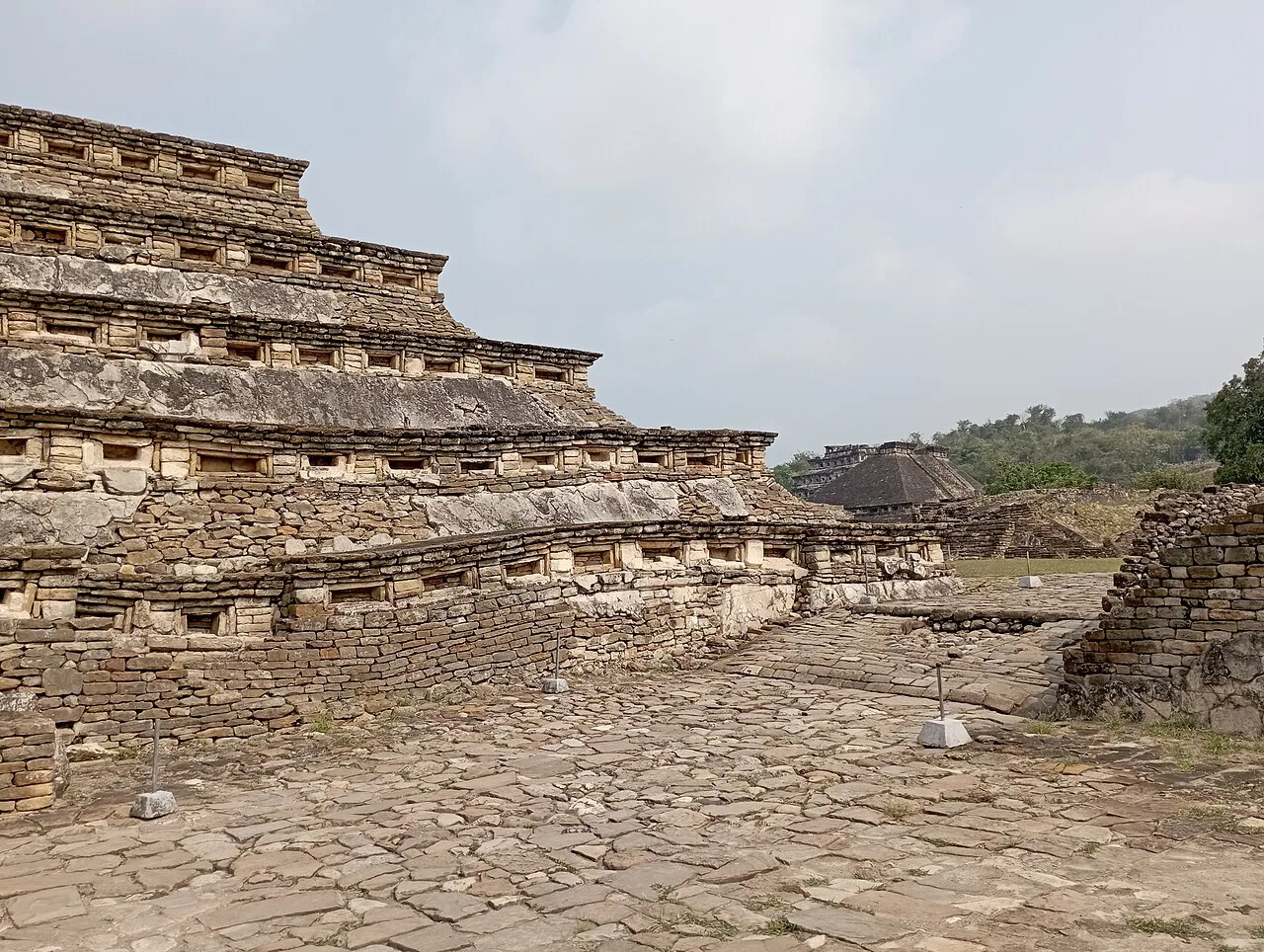
Why the site is known: the Pyramid of the Niches and the ballcourts
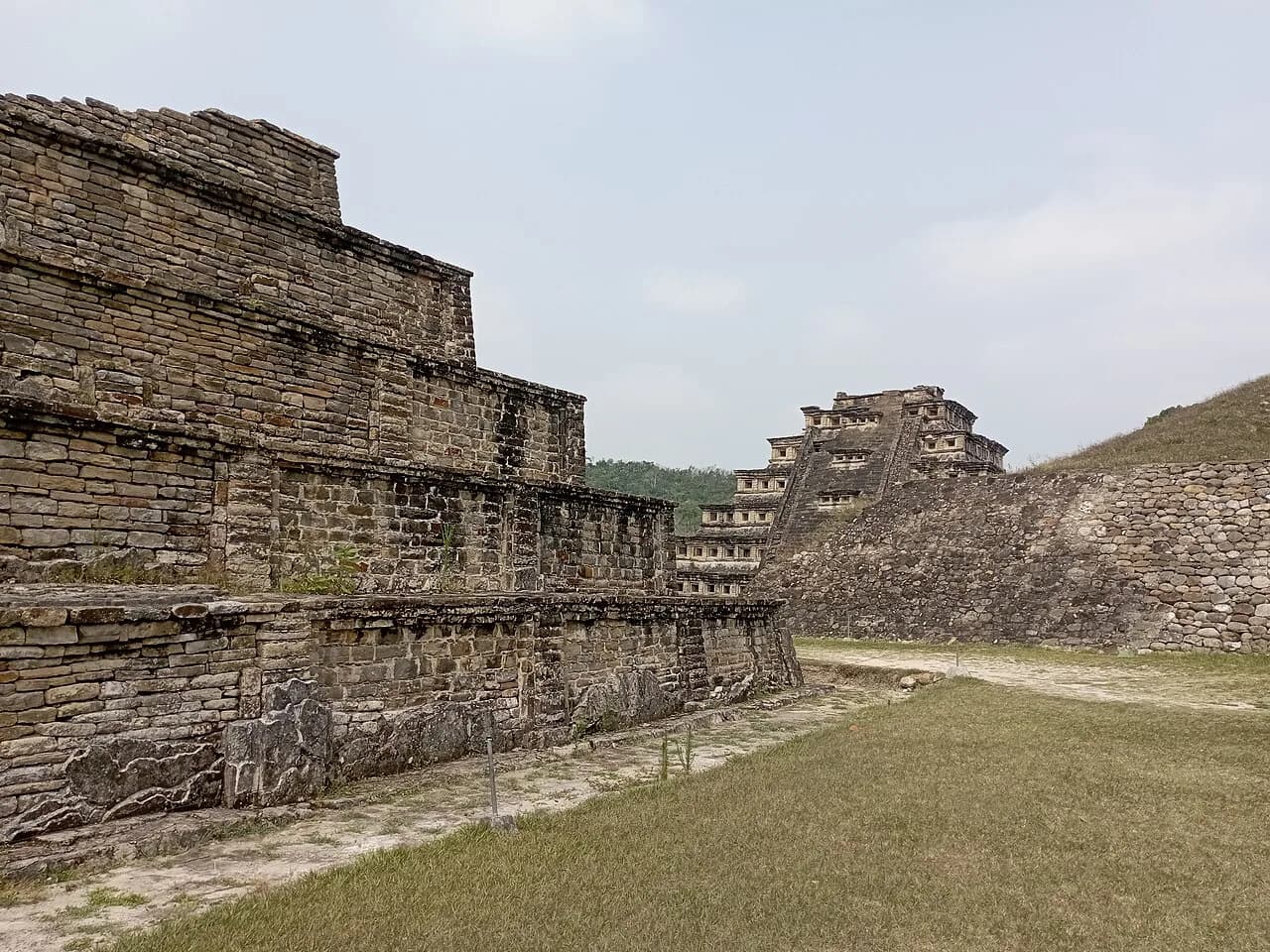
The Pyramid of the Niches is the building most travelers come for, a stepped structure whose façade is broken by rows of recessed openings that give it a honeycomb texture. It is the image on most postcards from Veracruz, and it is the one structure worth lingering at rather than photographing on the move. Walk its sides before climbing further into the site, because the light and the crowds both change as the morning goes on.
El Tajín also contains ballcourts, the stone courts where the Mesoamerican ball game was staged, and they sit within the same compact core as the pyramids. That is the practical advantage of the site over spread-out ruins: you can move between courts and pyramids on foot without a long transfer, and the main set pieces are close together. If you want to weigh this site against the country's other major ruins, our guide to the pyramids in Mexico sets out the alternatives.
The wider city includes plazas and platforms that reward a slower walk after the headline structures. UNESCO describes El Tajín as one of the largest and most important cities of the Classic era in Mesoamerica, which is a reminder that the Pyramid of the Niches is one building in a city, not the whole visit. Give the peripheral buildings twenty minutes of your time and the site reads very differently.
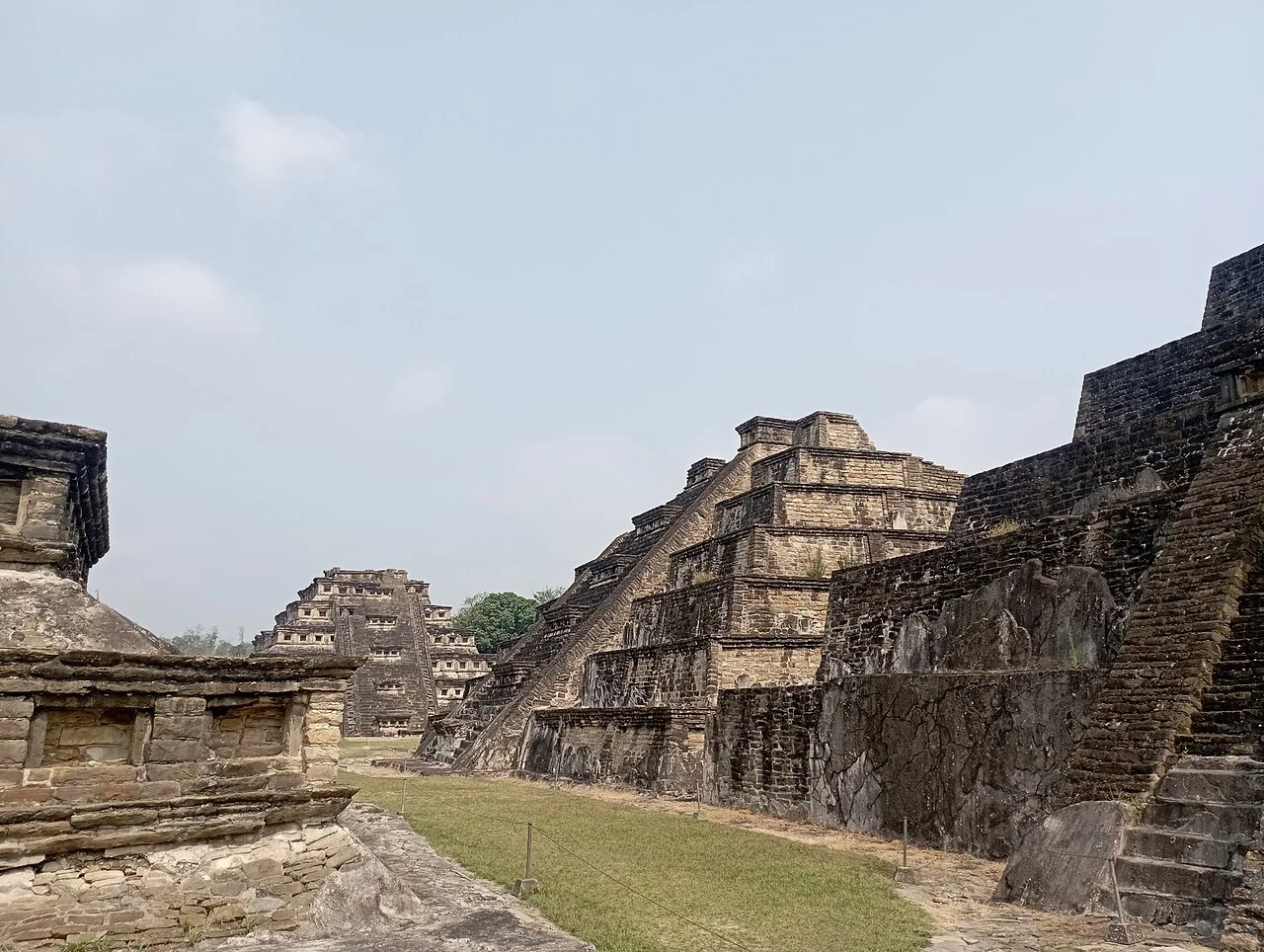
How long to spend at El Tajín
Plan on two to three hours inside the site if you want to see the Pyramid of the Niches, the ballcourts and the main plazas without rushing. A quick circuit of the headline structures fits in about ninety minutes, but that leaves no time for the peripheral buildings or the on-site museum. Add time for the entrance queue and for the walk back to transport at the end.
The heat is the real constraint on how long you last, not the size of the site. Northern Veracruz runs hot and humid for much of the year, and the core has limited shade, so an early start buys you more comfortable hours than a longer afternoon. If you are traveling with children or older family members, treat two hours as the working figure and cut the peripheral loop if energy drops.
How to get to El Tajín from Xalapa, Papantla and the coast
Papantla is the practical base for El Tajín, and Poza Rica is the regional transport hub that connects the area with the rest of Veracruz. From either town you reach the ruins by local transport or taxi, and the drive is short enough to make a morning visit and be back in town for lunch. Confirm the current departure point and fare locally, since these change more often than the site itself.
From Xalapa the trip is longer and better treated as an overnight than a day return. Xalapa is the state capital, inland and to the south, and the road north toward Papantla crosses hill country that eats time. Travelers with a single day in Veracruz should see the site from Papantla or Poza Rica, not from Xalapa.
From the Gulf coast, El Tajín is an inland detour of a few hours rather than a beachside stop. If you are staying around Tecolutla or Costa Esmeralda, give the ruins a full morning and keep the afternoon free for the return drive. Drivers should expect topes, the speed bumps that slow traffic through towns along the route, and plan distance in time rather than kilometers.
Opening hours, entry tickets and site rules
El Tajín is administered as an archeological site with published hours and a ticket, and the visitor rules are the standard ones for Mexican ruins: no smoking, no food inside, no pets, and no flash photography where it is restricted. Check the official listing for the current schedule and fee before you travel, because both are set administratively and change. Carry cash in pesos for the ticket window rather than assuming a card will work.
Mexican nationals, students, teachers and seniors often qualify for reduced or free admission at INAH sites, and Sundays are commonly free for Mexican citizens. Bring identification that supports any discount you plan to claim, since the ticket clerk will ask. Foreign visitors pay the full foreign-visitor rate, and combining the ruin ticket with a museum visit is usually the better value than paying twice.
What to bring and expect on the ground: heat, sun and walking
Bring water, a hat, sunscreen and shoes with grip. The site is a walk over uneven stone, low steps and packed earth, and the sun hits the open plazas hard by mid-morning. A refillable bottle and a light long-sleeved shirt do more for a comfortable visit than an umbrella.
Expect a working archeological site rather than a theme park: there is a ticket window, a museum, designated paths and barriers around the structures you may not climb. Vendors and guides gather near the entrance, and the volume of both rises with the tour buses mid-morning. Arriving at opening gives you the Pyramid of the Niches with far fewer people in the frame.
Cash matters here. Carry pesos for the ticket, for the museum, and for snacks and drinks near the entrance, because small vendors and local transport may not accept cards. Keep small bills; breaking a large note at a rural ticket window is not always possible.
Combining El Tajín with Papantla and the Totonac coast
Papantla is the natural pair for El Tajín: a Totonac town with a plaza, a church and a market, and the place to eat and buy vanilla after the ruins. Give the town a couple of hours on the same day rather than driving straight back to Poza Rica. The combination of ruins and town is what makes this corner of Veracruz worth the trip.
If you have a second day, the Gulf coast east of Papantla gives you a different landscape entirely, and the mountain towns of the Sierra add a third option. Travelers building a longer Veracruz loop often pair the ruins with Xico, Veracruz and its Cascada de Texolo, where the draw is waterfalls and a hillside town rather than pyramids. Farther south, Catemaco, Veracruz and the Los Tuxtlas rainforest make a separate trip with its own character and its own lore.
Travelers coming from Mexico City sometimes fold the ruins into a Puebla loop instead, adding a night in the Sierra Norte. Cuetzalan, Puebla is a cloud-forest town with a Sunday market and Totonac pyramids of its own at Yohualichan, and the drive between the two regions is long but doable over two days. Choose one direction, Puebla or the Gulf, rather than trying to circle both in a weekend.
El Tajín in context: its peak, its decline and its UNESCO listing
El Tajín peaked between the early ninth and early thirteenth centuries and was the most important center in northeastern Mesoamerica at that time. UNESCO inscribed the site as a World Heritage Site on the strength of its urban plan and its architecture, which is why the Pyramid of the Niches appears in surveys of Mesoamerican building rather than only in Veracruz guidebooks. The listing is the reason to read up before you arrive: the site rewards knowing what you are looking at.
The abandonment of the city and the identity of its builders are still discussed rather than settled, and the site's own published material does not hand you a tidy answer. That uncertainty is part of what makes the ruins interesting, and it is a reason to use the museum and official panels rather than treating any single tour narrative as final.
Is El Tajín worth adding to a Veracruz itinerary?
Yes, if you are already in northern Veracruz or can build a night in Papantla around it. The Pyramid of the Niches and the ballcourts are close together, the site fits a comfortable half day, and pairing the ruins with the town gives the stop a shape that a rushed day trip from Xalapa never does. Travelers with only a beach itinerary should weigh the inland detour honestly against the hours it costs.
Book transport and confirm the hours and ticket price directly before you go, then arrive near opening with pesos in hand and water in your bag. That is the whole plan: ruins in the morning, Papantla for lunch, and the coast or the mountains for the rest of the trip.
Explore more Xalapa guides
- Cacaxtla
- Catemaco
- Coatepec
- Cuetzalan, Puebla
Frequently Asked Questions
Was El Tajín built by the Aztec?
The sources here describe El Tajín as a major Classic-era center in northeastern Mesoamerica that peaked from the early ninth to the early thirteenth century, and none attributes the city to the Aztec. The identity of the builders is not resolved in a line, so use the museum and official panels at the ruins rather than treating a tour guide's claim as final.
What is the best base for visiting El Tajín?
Papantla is the most convenient base, with Poza Rica as the regional transport hub if you are arriving by bus from elsewhere in Veracruz. Xalapa is too far south to make the ruins a comfortable day return. Papantla is also where you can eat, see the town plaza and buy vanilla after the ruins.
Sources
Notes for your next Mexico trip
Optional updates when we add or correct a town guide.
You might also like
Continue reading
More guides you'll find useful