Things to Do in Puebla: Zócalo, Churches, Museums, Mole
Plan things to do in Puebla around the Zócalo, Cathedral, Capilla del Rosario, Biblioteca Palafoxiana and Museo Amparo, plus mole, cemitas and a Cholula side trip.
On this page
Puebla rewards two or three unhurried days, because almost everything worth seeing clusters within walking distance of the Zócalo. The historic center is a UNESCO World Heritage Site of 16th- and 17th-century buildings covered in Talavera tile, and the city's fourth-largest population still leaves the center calm enough to cross on foot. This guide groups the sights by neighborhood so you can build a route instead of a checklist, then covers what to eat and how to reach Cholula.
Come in with a rough shape for each day: the Zócalo and the Cathedral first, the Santo Domingo churches and the library next, then a museum afternoon, with the barrios and markets filling the gaps between meals. Buses from Mexico City land at the CAPU terminal on the north side of town, so you can drop bags and walk the center the same afternoon.
How the historic center is laid out
The Zócalo is the anchor. The Cathedral faces it, and the streets running south and east from the plaza hold most of the sights a first-time visitor wants: the Biblioteca Palafoxiana, the Museo Amparo, the Santo Domingo church complex and the antiques street at Callejón de los Sapos. Nothing on that loop requires a taxi.
Walking is the default inside the center; for anything beyond it, the city's RUTA bus network and ride-hailing apps cover the distance. If you are arriving by car from Mexico City on highway 150D, the route runs about 133 kilometers and includes tolls that cost 216 MXN in 2026, so carry pesos or a card that works at the booth.
Start at the Zócalo
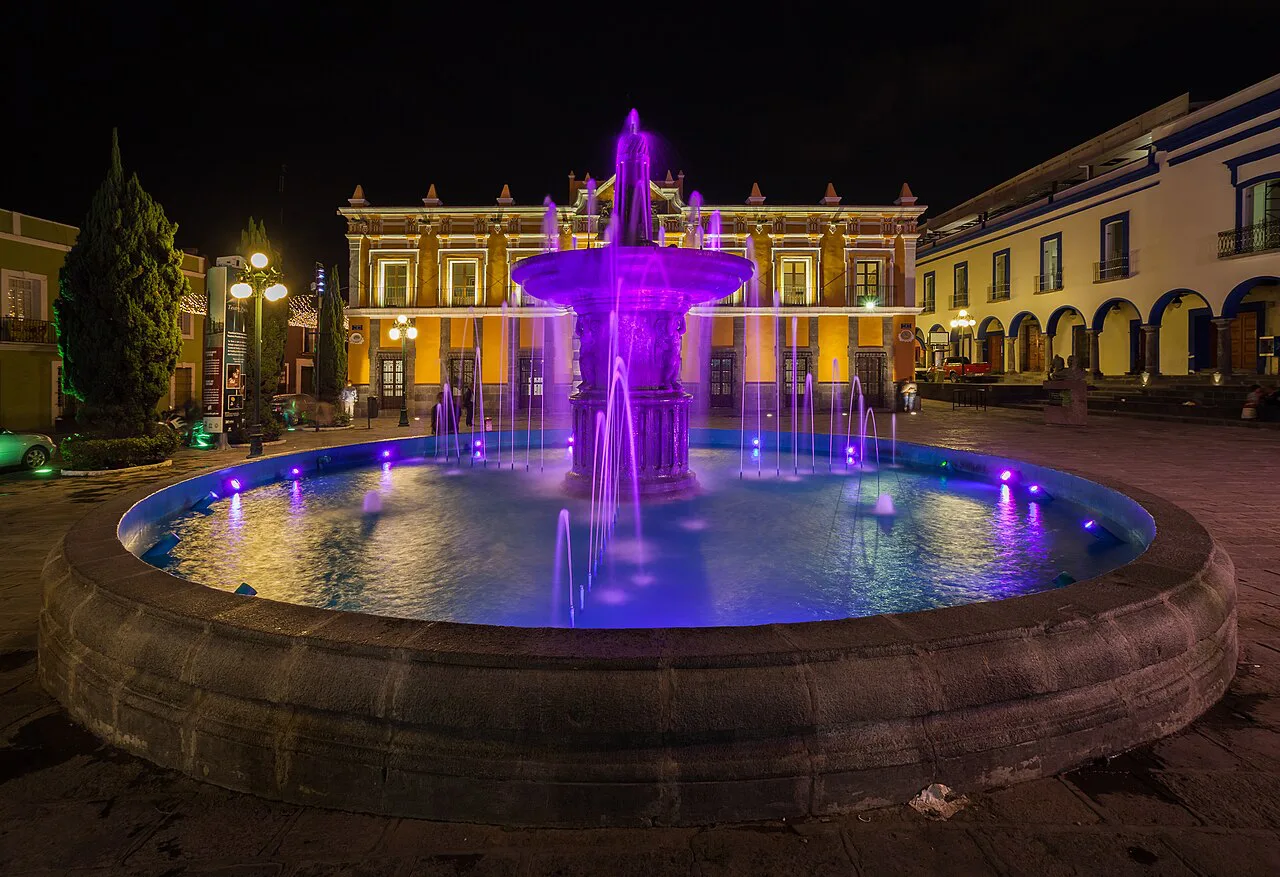
The Zócalo is Puebla's main square and its easiest introduction: a broad plaza with a large stone fountain, balloon sellers, street performers and families who use it as a living room. Sit for half an hour before you do anything else, and you will start recognizing the streets that radiate from it.
Use the plaza as a compass. The Cathedral is on its north side, the Palafoxiana library and Amparo museum are a short walk south, and El Parián market sits within roughly ten minutes on foot, which makes the Zócalo a natural place to reset between stops.
The Cathedral and its bell towers
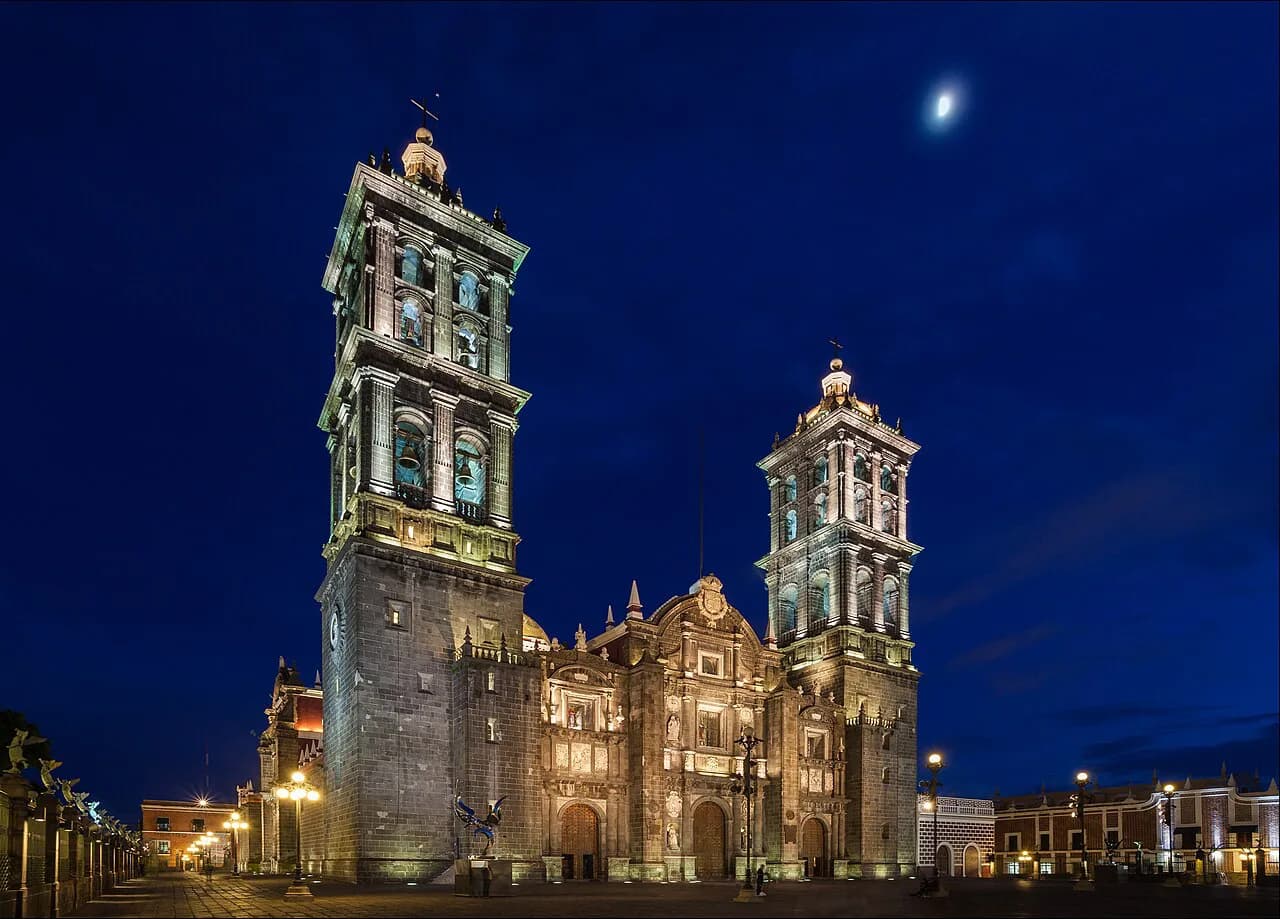
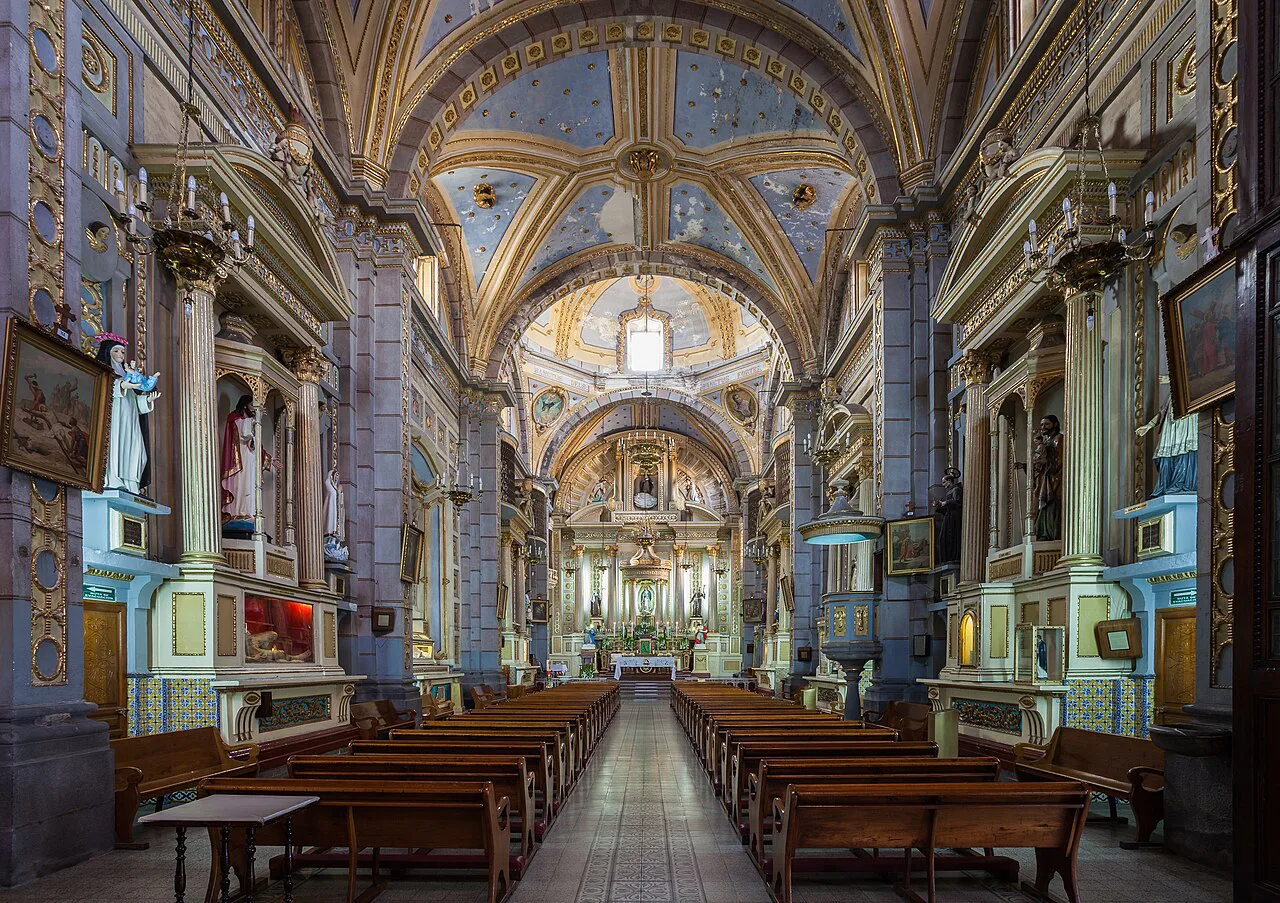
Construction on the Cathedral began in 1575, which puts it among the oldest cathedrals in the Americas, and its bell towers are the tallest in Mexico. Entry is free, so there is no reason to skip the interior on the way past the plaza.
Give it twenty or thirty minutes rather than a whole morning. Look up at the towers from the square first, then step inside for the nave and altars, and save your longer church stop for the gold chapel a few blocks away.
Capilla del Rosario inside Santo Domingo
The Capilla del Rosario is a chapel, not a separate church, and it sits inside the Templo de Santo Domingo. Its interior is covered in gold ornament to a degree that surprises visitors who think they have seen enough baroque churches, and it is the single interior most likely to stay with you.
Pair it with the library two blocks away, since both sit on the same short walk south of the Zócalo. The chapel reopened after earthquake repairs, and the surrounding center is largely repaired, though you may still pass a building under scaffolding.
Biblioteca Palafoxiana: the wood-paneled library
The Biblioteca Palafoxiana occupies the Casa de la Cultura and was founded in 1646, which makes it the oldest public library in the Americas. The draw is the room itself: tiered wooden shelving under a vaulted ceiling, with the collection arranged as it has been for centuries.
It is a quick stop, maybe twenty minutes, but a memorable one, and it works well as a breather between the gold chapel and a museum. Step in, take the room in from the far end, and move on.
Museo Amparo and its rooftop
The Museo Amparo fills two colonial-era buildings and holds one of Mexico's most important pre-Hispanic art collections, alongside modern and contemporary galleries. A long timeline places the ancient pieces against events elsewhere in the world, which helps if you are not already fluent in Mesoamerican archaeology.
Two details make it worth more than a passing hour: preserved kitchen and living rooms from the family that once owned the house, and an enormous rooftop terrace over the historic center. Plan a couple of hours and end on the roof.
Two more museums to weigh
The Museo Internacional del Barroco is the modern-design counterpoint to all the tile and gold, and it sits outside the tight center loop, so it costs you a ride or a longer walk. The Museo Regional de la Revolución Mexicana is the more central option, housed in the historic house where the revolution's opening episode is told.
With two days, pick one and give it a proper hour or two rather than squeezing both. If your interest leans toward the 20th century, take the revolution museum; if you want architecture after a morning of churches, take the baroque museum.
Talavera tiles and pottery
Talavera is the ceramic style you will notice on facades all over the center, a fusion of Spanish and local indigenous techniques made in Puebla and nearby Tlaxcala. It is part of what earned the city its UNESCO listing, and shops selling Talavera pottery and ceramics are scattered throughout the center.
Buy a small piece you can carry rather than something large you will worry about on the bus home. Prices vary by workshop and size, so compare a few shops before committing.
Barrio de los Sapos and Callejón de los Sapos
Callejón de los Sapos, the Alley of the Frogs, is one of the most colorful streets in Puebla, lined with brightly painted buildings, and its antiques market spreads through the surrounding Barrio de los Sapos. The best finds sit in the brick-and-mortar shops along the street rather than the stalls in the open.
Come in the morning to browse before the crowds thicken. Expect 200-year-old ceramics, hand-carved chests and a fair amount of 1980s kitsch, and bring cash if you plan to bargain.
Barrio del Artista and El Parián
Barrio del Artista is the artists' quarter, a colorful block of small studios that open onto the street, where you can watch painters at work and buy directly from them. The Génesis statue stands in the same area, and the whole neighborhood is short enough to walk in fifteen minutes.
For souvenirs, head to El Parián, a market stocked with painted mugs and hand-stitched Mexican dolls and roughly ten minutes on foot from the Zócalo. Markets in the center generally open around 10 a.m. and run until sunset, so plan your shopping for the middle of the day.
Calle de los Dulces
Calle de los Dulces, the street of sweets, is Puebla's candy-shop cluster, and the scent of sugar and fruit is the reason to walk it even if you are not buying. Regional sweets made from fruit, nuts and egg yolks are the local specialty, and shops sell them by weight.
Buy a small assortment to share rather than a large box, since the sweets are heavy and sweet. Cash is the practical choice at the smaller counters.
Eat mole poblano
Mole poblano is Puebla's signature dish, a sauce built from dozens of ingredients including dried chiles, nuts, fruit and spices, often with chocolate, and served over chicken. Order it at least once, ideally at lunch, when Puebla kitchens give it the most attention.
Beyond mole poblano, look for other moles on the same menus, and consider a sampler plate if a restaurant offers one, so you can compare a fruit-based version against a smoky one. For a broader shortlist of tables, see our picks for the best restaurants in Puebla.
Cemitas and tacos árabes
A cemita is a sandwich on a sesame-seeded bun with a crisp crust, classically filled with a breaded cutlet, strings of Oaxaca cheese, avocado and herbs. Cemita shops are everywhere in the center and the sandwich is a cheap, filling lunch between sights.
Tacos árabes are Puebla's other essential street food, and they are the local version of a shawarma-style taco. Pair them with a small shot of pasita, the local raisin liqueur, if you want the full Puebla pairing, and keep the meal early so you have the afternoon free.
Getting to Puebla from Mexico City
The simplest route from Mexico City is the bus: ADO and Estrella Roja both run frequent departures from the airport terminals, and the ride takes about two to two and a half hours to Puebla's CAPU terminal or Paseo Destino. From the airport, buses in 2026 cost 450 to 457 MXN; from the city's TAPO terminal you can simply show up and take the next departure.
Driving highway 150D takes about two hours and involves tolls. Puebla's own airport has limited connections, mostly within Mexico plus Houston, so most travelers from the US arrive through Mexico City. Verify current fares and schedules with the bus operator when you book, since they change with time of day.
Getting around Puebla
Inside the historic center, walk. For sights beyond it, the RUTA bus system covers the city, and ride-hailing apps are the easiest point-to-point option, particularly for the Museo Internacional del Barroco or an evening return. Intercity buses to the surrounding area leave from CAPU and Paseo Destino.
If you plan a day in Cholula, decide between a bus, a taxi or a tour before you set out. A free tourist train between Puebla and Cholula has run at times in the past, taking about 40 minutes with only a couple of departures a day, but confirm whether it is running before counting on it.
Cholula: the pyramid with a church on top
Cholula's archaeological zone holds Tlachihualtepetl, the largest pyramid in the world by Mass, and it is unlike any other ruin you will visit in Mexico because most of the structure is still buried under the earth. The Spanish built a church on top, and the climb up and around the site is the point.
Be honest with yourself about your interests. If archaeological sites are not your thing, the visit can feel dull because there is so little standing stone to see; the town of Cholula itself, with its restaurants and shops, absorbs the rest of the day. It sits less than ten miles from Puebla, making it an easy half-day trip.
For more options beyond the city, including other nearby sites, see our guide to the Puebla pyramids and plan which one fits your remaining time.
How many days Puebla needs
Two full days covers the core: a Zócalo-and-Cathedral morning, the Santo Domingo chapel and Palafoxiana library, one museum, the Sapos market and a mole lunch. Three days adds a slower museum afternoon, the Barrio del Artista and a half day in Cholula without rushing. If you enjoy this kind of compact, walkable historic center, our guide to things to do in Acapulco offers a contrasting coastal comparison.
If you are combining Puebla with Mexico City, build in the two-to-two-and-a-half-hour bus ride each way and avoid scheduling a tight connection on arrival day. A four-day version, as one itinerary suggests, leaves room for Cholula, Atlixco and the smaller towns around the valley.
Build your Puebla route around the Zócalo
Plan Puebla as a walking city with a cluster per half day: Zócalo and Cathedral, then Santo Domingo and the library, then a museum and the Sapos market, with meals placed deliberately so mole poblano and a cemita each get their own sitting. Add Cholula as a half day only if the buried pyramid appeals to you.
For a food-first route, line up your mole and cemita stops before you go with our picks for the best restaurants in Puebla, and use our Puebla food guide to decide what else is worth ordering. Check current museum hours and bus times with the operators before you travel, since both shift by season and day.
Explore more Puebla guides
- Best Restaurants in Puebla
- Puebla Food
- Puebla Map
- Puebla Pyramids
Frequently Asked Questions
Do I need a car to see Puebla's sights?
No. The Zócalo, the Cathedral, the Capilla del Rosario, the Biblioteca Palafoxiana, the Museo Amparo, Callejón de los Sapos and El Parián all sit within a walk of one another. For the Museo Internacional del Barroco or a Cholula trip, use the RUTA buses, a taxi or a ride-hailing app instead of renting a car.
Is a day trip from Mexico City to Puebla enough?
It is tight. The bus from Mexico City takes about two to two and a half hours each way, which leaves only a few hours in the center. Two nights gives you the churches, a museum and a proper mole lunch without spending the day in transit.
What should I order in Puebla besides mole?
Order a cemita, the sesame-bun sandwich with breaded cutlet, Oaxaca cheese and avocado, and try tacos árabes, the city's shawarma-style taco. Sweet shops along Calle de los Dulces sell regional candies by weight if you want something to carry home.
Sources
Notes for your next Mexico trip
Optional updates when we add or correct a town guide.
You might also like
Continue reading
More guides you'll find useful