Things to Do in Zacatecas: Cathedral, Mines and the Cable Car
Plan your days in Zacatecas around the Cathedral, Plaza de Armas, the Mina El Edén mine tour, the Teleférico to Cerro de la Bufa, and the city's mask museums.
On this page
Two to three days cover the headline sights in Zacatecas: the Cathedral on Plaza de Armas, the Mina El Edén mine, and the Teleférico up to Cerro de la Bufa, all packed into a UNESCO-listed historic center you can cross on foot. This guide walks that center in order, west along Tacuba and Avenida Hidalgo, then adds the museums and the two outer stops worth the time.
The city sits at over 8,100 feet, so the altitude is a planning factor as much as the schedule. Zacatecas was founded on silver in 1546, and the wealth shows in pink quarry stone, cobblestone lanes with steep passageways between upper and lower streets, and plazas that reward a slower pace.
Why Zacatecas rewards a short stay
Most foreign travelers skip Zacatecas for Guanajuato or San Miguel de Allende, which keeps the center pleasantly uncrowded and makes the city easy to see in a short trip. The compact historic core means you spend your time looking at buildings rather than moving between them, and two to three days gets you through the Cathedral, the mine, the cable car and the museums without rushing.
Plan the altitude into the first day. Walking uphill between plazas at this elevation is tiring even for fit travelers, so group sights by street level and sit down between stops rather than sprinting from one end of the center to the other.
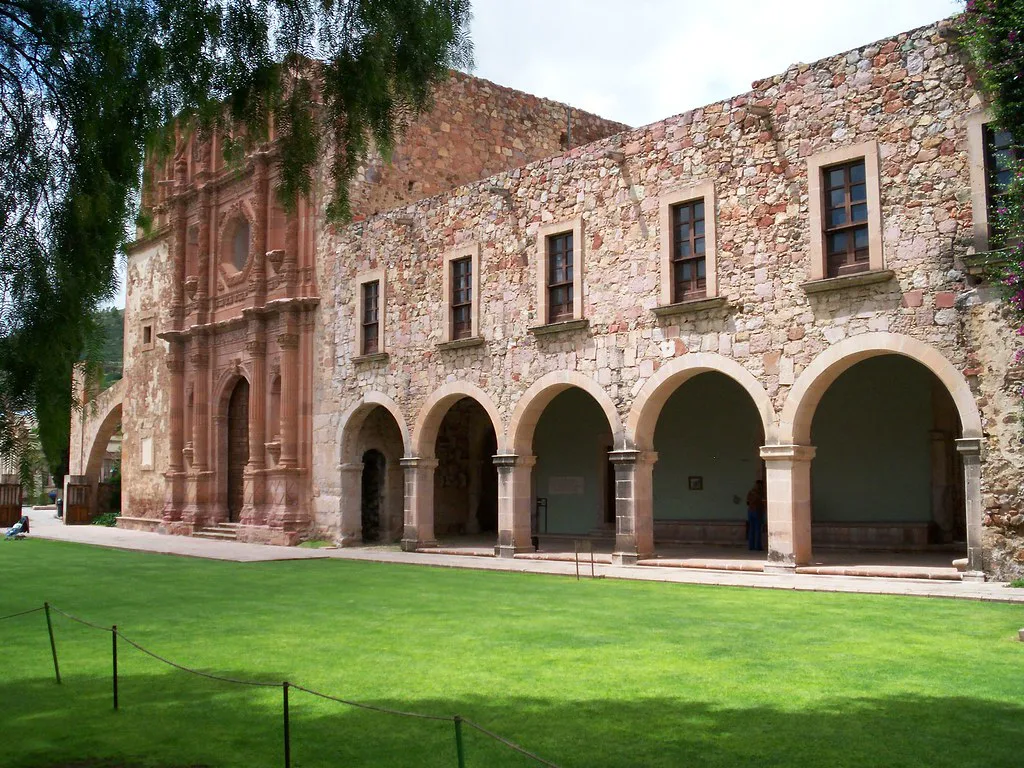
How the center is laid out and how to walk it
Start at the Fuente de los Faroles, the fountain that anchors a small traffic island ringed with shops and food businesses, and use it as your origin. From there you head west on Tacuba, which runs from the fountain toward Plazuela Goitia, or pick up Avenida Hidalgo past the Cathedral; those two streets are the spines of any walking day. Our Zacatecas map lays the route out block by block.
The cobblestone streets climb and drop, and inclined passageways connect the upper and lower levels of the center. Build your day so you walk uphill in the morning and downhill later, and wear shoes that handle uneven stone. Allow more time than the distances suggest, because the elevation turns a five-block climb into a real effort.
Avenida Hidalgo is the stately neoclassical main street, capped at its end by the twin towers of the Cathedral. Treat it as the spine of the afternoon and branch off for plazas rather than zigzagging back and forth across the center.
Plaza de Armas and the Cathedral Basilica
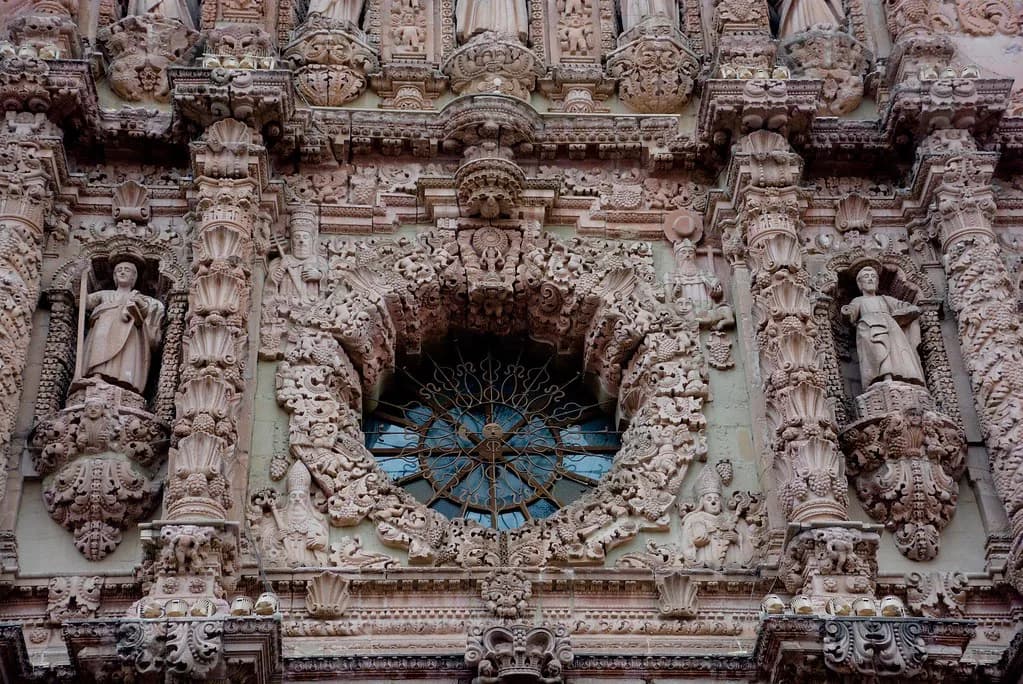
The Cathedral Basilica of Zacatecas is the centerpiece of Plaza de Armas, built in stages through the 18th and early 19th centuries with money from mine owners. The pink stone facade is Churrigueresque Baroque, and it carries a small figure of an angel holding a tabernacle, a detail most visitors miss when they snap a photo and move on.
Walk the interior rather than just the doorway. The floor plan is a Latin cross, the vaulted roofs show Tuscan influence, and a gold-leaf altarpiece is the highlight; the same source describes a building that evolved across several decades, so expect layers of work rather than one date.
Next door stands the Palacio de Gobierno, a government building that housed governors until the 19th century. You may find a press conference or a crowd in front of it, but the facade is worth a few minutes as you cross the plaza.
Plazuela Goitia and the Mercado Jesús González Ortega
Plazuela Goitia is flanked by the Mercado Jesús González Ortega, which served as the city's main market in the 19th century. The stalls sell clothing, books and local wines, and a visitors booth at the main entrance hands out maps and advice, making this the practical first stop if you arrive without a plan.
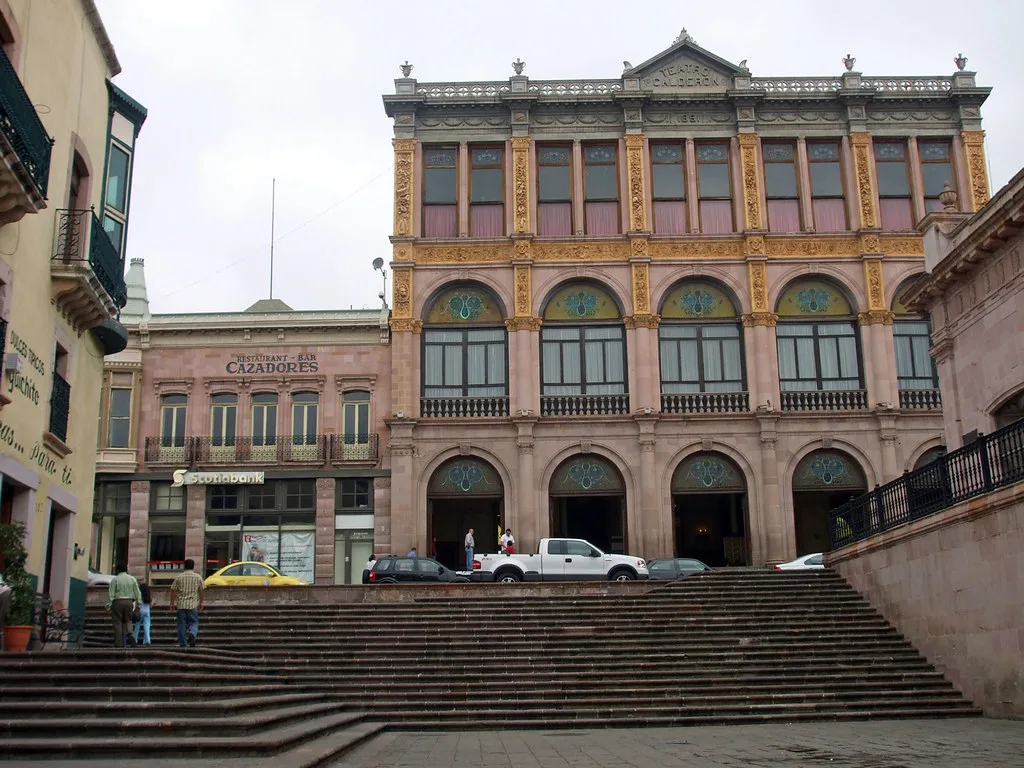
The plaza is liveliest at night, when locals gather for entertainment that ranges from rock cover bands to opera, and vendors sell inexpensive food while bars line the Mercado. The Neo-Renaissance Teatro Fernando Calderón, finished in 1897, sits on the other side of the Plazuela and is worth a look even if you are not catching a show.
Mina El Edén: the mine tour
Mina El Edén is the former silver mine at the heart of the city's mining heritage, now a walk-through attraction where a small train takes you through tunnels and galleries. The mine produced gold, silver, lead and zinc before its conversion for visitors, and a single line of context is enough: the Spanish crown worked these veins with forced Indigenous labor before independence.
Part of the mine now holds a nightclub, a curiosity you will hear about whether or not you go. Skip the club and pair the mine with the cable car instead, since both sit in the historic section and fill one block of a day.
The Teleférico and Cerro de la Bufa
The Teleférico de Zacatecas runs a cable car between two stations on peaks in the historic section, giving you a bird's-eye view of the center, the monuments and the surrounding hills. Ride it one way and walk back down if your legs allow it, or take it both ways and save your energy for the hilltop.
Cerro de la Bufa is the hill at the top, and the payoff is the view over the city and the dry plateau beyond it. Go in the clearer part of the day, bring a layer for the wind, and plan the ride as the anchor of an afternoon rather than a quick add-on.
Two Coronel museums, two very different collections
The Museo Rafael Coronel holds a large collection of Mexican folk art assembled by Rafael Coronel, with masks as the draw, alongside paintings, craftwork, pottery and totems. If you see only one museum here, make it this one for the masks alone.
The Museo Pedro Coronel is the other half of the pair, built on the collection donated by the Zacatecas painter. Its holdings run from Greek and Roman pieces and ritual masks to works by Picasso, Goya and Miró, which makes it the more international of the two.
Extra stops: Templo de San Agustín and La Encantada
The former Templo de San Agustín holds a gallery, a museum and an unusual library of stones carved with Baroque motifs, and the quarry stonework inside is among the finest in the state. Read the exterior first, then go in for the carved detail.
Parque Recreativo La Encantada is the family stop, with wooded grounds, murals, a zoo and a mini train. It sits outside the walking core, so give it a half day of its own rather than folding it into a plaza-to-plaza route.
How long you need, and how to pace it
Two to three days covers the Historic Center, the Cathedral and El Edén Mine, which is the core of any first visit. Four to five days lets you add experiences outside the center, so build the extra days around a tour or excursion rather than adding more plazas.
A workable shape: day one for the center on foot, with the Fuente de los Faroles, Tacuba, Plazuela Goitia and Plaza de Armas; day two for the mine and the cable car; day three for whichever museums you skipped. Put the museum you care most about first in the day, because the altitude makes an afternoon of standing tiring.
Getting there and getting around
Zacatecas lies roughly 300 miles northwest of Mexico City, a long ride across the high plateau from the capital. Once you are in the center, the layout is walkable with some inclined passageways, so you can leave the car parked for the whole stay.
For longer legs, such as the park or a side trip, arrange your ride before you set out rather than relying on hailing one on a dark side street. Our Zacatecas Bus Guide covers the intercity options if you are arriving from San Luis Potosí or another city on the plateau.
What to expect in pesos, tickets and timing
Ticket prices, opening days and cable car fares change, and the operator posts current numbers at the entrance, so confirm them there before you commit your day. Carry pesos in small bills for market stalls, the mine ticket window and the cable car, since card readers are not guaranteed at every counter.
Which Zacatecas day plan fits your trip?
If you have two days, put the Cathedral, Plaza de Armas, Plazuela Goitia and the market into a single walking day, then take the mine and the Teleférico on the second. With three days, add the Museo Rafael Coronel for the masks and the Museo Pedro Coronel for the international collection, and save the park for a family half day.
Travelers who want a bigger city after Zacatecas can look at the things to do in Acapulco on the coast, or the things to do in Cabo San Lucas if the trip runs to Baja. Either way, leave Zacatecas with a list of what you did not see, because the museums reward a return.
Explore more Zacatecas guides
- Zacatecas Bus Guide
- Zacatecas Food
- Zacatecas Map
- Zacatecas Markets
Frequently Asked Questions
Is Zacatecas worth visiting for the architecture alone?
Yes. The UNESCO-listed historic center is built of pink quarry stone, and the Cathedral on Plaza de Armas is the standout, with a Churrigueresque facade and an angel holding a tabernacle. The Palacio de Gobierno next door and the cobblestone lanes around it make a center that justifies a walking day on its own.
Where is Zacatecas close to?
It is about 300 miles northwest of Mexico City, across the high plateau. Travelers often combine it with other colonial cities on the same plateau, which keeps the driving manageable if you have a car.
How does the altitude affect a visit?
At over 8,100 feet, the city leaves even fit travelers short of breath, especially on the inclined passageways between upper and lower streets. Pace your day, walk uphill in the morning and sit down between stops.
Sources
Notes for your next Mexico trip
Optional updates when we add or correct a town guide.
You might also like
Continue reading
More guides you'll find useful