Monarch Butterfly Sanctuaries: What to See and How to Plan
Monarch butterfly sanctuaries in Mexico protect the mountain forests where monarchs overwinter. Here is what the reserves are and how to plan a visit.
On this page
The monarch butterfly sanctuaries are the overwintering sites inside the Monarch Butterfly Biosphere Reserve, a 56,259-hectare World Heritage property in rugged forested mountains roughly 100 km northwest of Mexico City. You go to see monarchs gathered in dense clusters on the trees, and the trip is built around the season when they are there. This guide covers what the reserve protects, how a visit works, when the butterflies cluster and when they fly, and how to reach the sites from Morelia and Mexico City.
Two practical constraints shape the day: cold at altitude and cash. The clusters sit high in the mountains, so mornings are chilly even when the valleys below are mild, and you should plan on carrying pesos for the gate and for anything you buy along the approach. Everything else follows from the butterflies' own schedule rather than yours.
What a monarch butterfly sanctuary is
A sanctuary is a patch of oyamel fir forest where monarchs spend the winter, protected within the Monarch Butterfly Biosphere Reserve. The UNESCO listing describes the reserve as rugged forested mountains about 100 km northwest of Mexico City, and it protects key overwintering sites across Michoacán and Mexico State.
The monarchs themselves are the reason the forest is protected: they gather on the trees in clusters, and the reserve exists to keep that habitat intact. The Monarch Butterfly Fund works in and around the Mexico overwintering regions on habitat conservation, reforestation with local communities, scientific monitoring and environmental education.
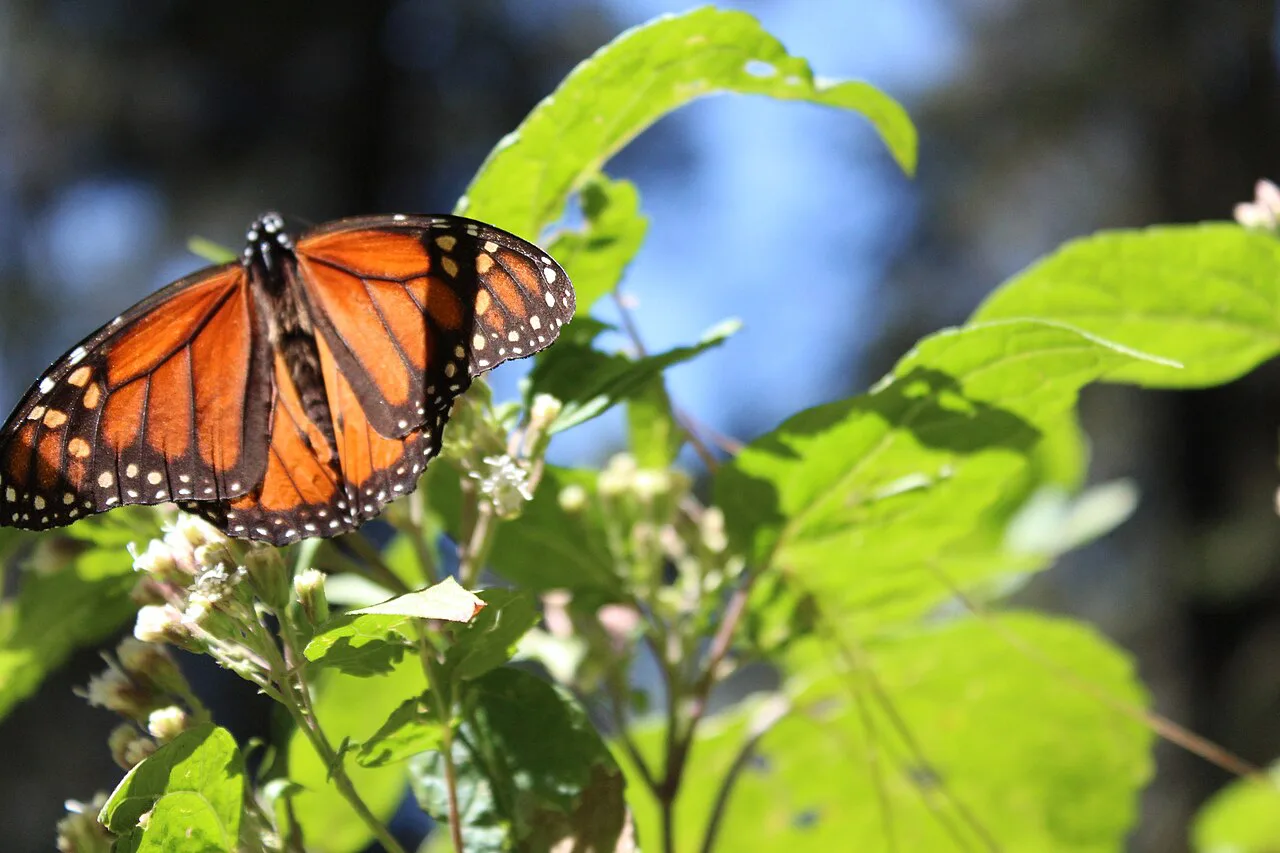
Why the sanctuaries matter
The World Heritage designation recognizes the reserve as a protected area rather than a park built for visitors. Its value is the overwintering habitat itself: the forest cover the monarchs depend on through the cold months, held in place across a large mountain landscape.
Conservation groups treat habitat loss as the central threat to the migration. The Monarch Butterfly Fund's work in the region includes forest restoration and reforestation involving local communities, alongside research and education programs, which is why a visit is a walk through working conservation land rather than a managed attraction.
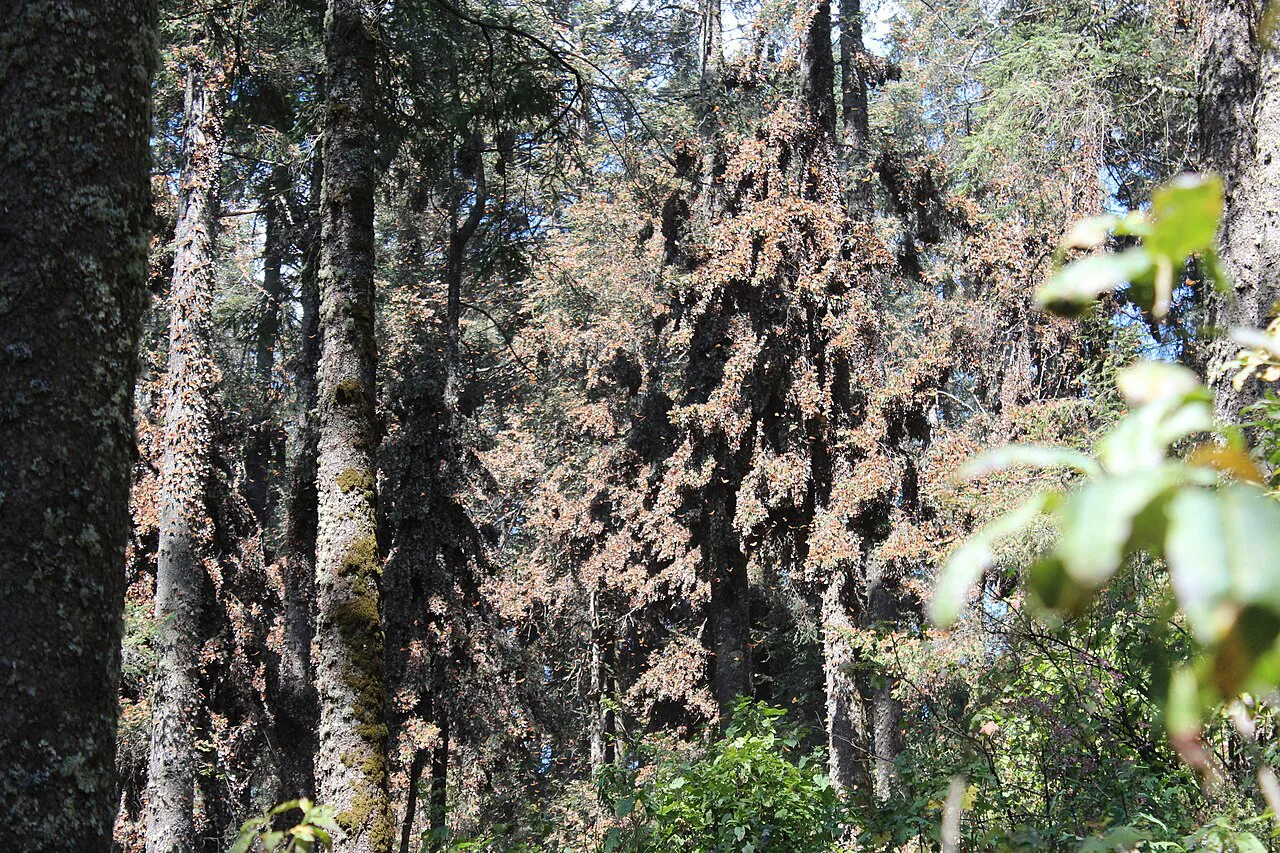
The season: when monarchs cluster at the sanctuaries
Monarchs arrive at the overwintering sites in the fall and leave in late winter. The City of Pacific Grove describes the same cycle for its California site, with butterflies arriving in October and clustering on pine, cypress and eucalyptus trees; the monarchs that winter in central Mexico follow a comparable fall-to-late-winter schedule in the reserve's oyamel fir forests.
Outside the migration months, the reserve is still a forest but not a butterfly spectacle. Pacific Grove's sanctuary is described as open year-round while the butterflies are there from October through February, which is the useful distinction: the land is accessible, the monarchs are seasonal.
The Monarch Butterfly Fund posts the winter population figures for the Mexico overwintering colonies after each season, and those numbers show how much the count varies from year to year. Check them before you fix a date, because a strong season and a weak one look very different on the trees.
How a sanctuary visit works
You park or get dropped off near the sanctuary entrance, then walk up a trail into the forest to the viewing areas. The approach is uphill on a forest path, so allow time for it and go at a pace that suits the altitude; the viewing itself is standing on a marked path looking up into the trees.
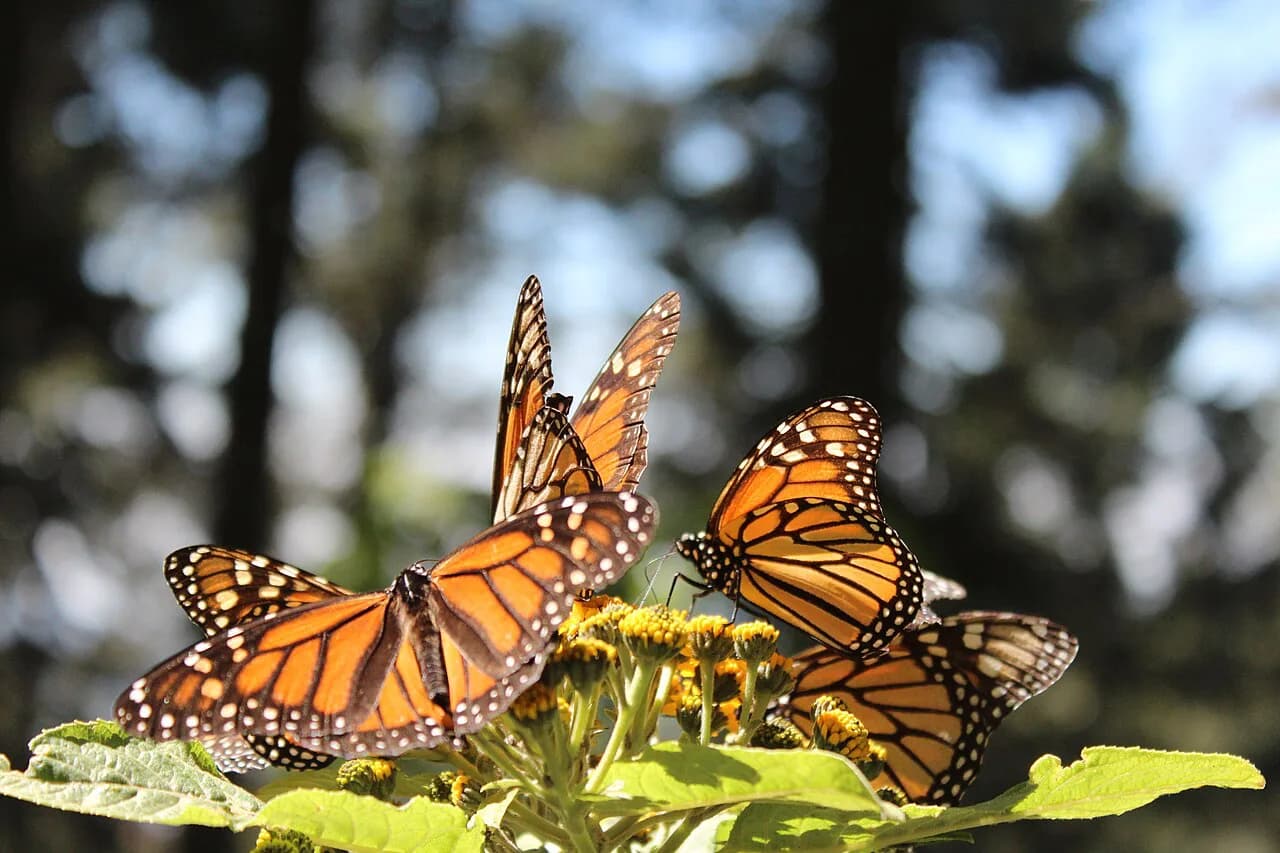
What you see depends on the temperature. On cold, cloudy mornings monarchs hold tight in clusters that look like small pinecones or brown leaves hanging from the branches; on warm, sunny afternoons they fly and drift overhead and settle on flowers. Pacific Grove's guidance is that clustering happens before 11 am or on overcast days below 55 F, while flight picks up midday and afternoon on sunny days above 55 F, and the same cold-blooded behavior applies in the Mexican forests.
The butterflies do not use the same trees every year or even every day, so the guides at the site point out where the clusters are that morning. Ask rather than scanning on your own; a cluster high in a fir is easy to miss until someone shows you the shape of it.
Cold and cloudy versus warm and sunny
Monarchs are cold-blooded, so their activity tracks the weather. When it is cold and cloudy they conserve energy by clustering, and when it warms up they fly to nectar flowers and move through the canopy. That is why a morning visit and an afternoon visit to the same sanctuary can feel like two different places.
Plan the day around which behavior you want to see. For packed clusters, arrive early and hope for overcast; for movement and color across the flowers, come after midday on a sunny day. Bring a warm layer either way, because the forest at altitude stays cold in the morning.
Sanctuaries and their access points
The reserve sits across the mountains of Michoacán and Mexico State, and the sanctuaries are reached from the towns on either side of the range. Angangueo and the villages around El Rosario serve the Michoacán side, while the Mexico State access points sit closer to Mexico City; each sanctuary has its own entrance, trail and local services.
The drive and the walk are the two time costs to plan for. The reserve is about 100 km northwest of Mexico City as the listing gives it, but that is straight-line distance across mountains, not road time, and the last stretch to any entrance is slow going. Add the uphill walk from the parking area, which takes longer than the distance suggests.
If you base in Morelia, the sanctuary makes a long day out and pairs naturally with the towns around Lake Pátzcuaro. Pátzcuaro itself is a good place to spend the evening after a cold morning in the forest.
Getting there from Morelia and Mexico City
From Morelia, the sanctuaries are a road trip into the mountains, most easily done with a rental car or an organized tour that handles the mountain roads and the parking at the entrance. From Mexico City, the reserve is northwest of the city and reached by road the same way; a tour removes the guesswork about which entrance is operating and where to leave the car.
Public buses run between the towns and cities of the region, but they put you in town, not at the sanctuary gate, and the last leg is usually a local taxi or a shared ride up to the entrance. Agree on the fare and the return pickup before you go up, since the entrance is not a place where you can count on finding a car waiting.
However you arrive, carry pesos in small bills. The gate, the local taxis and the food stalls along the approach deal in cash, and card readers are not something to rely on in the mountains.
How long to allow for a sanctuary day
Give the sanctuary a half day at minimum and a full day if you are coming from Morelia or Mexico City. The walk up, time at the viewing area and the walk back down take a few hours on their own, before you count the drive in each direction.
Build slack into the plan for the mountain road and for the altitude. A slow, steady climb is the sensible approach for anyone not used to the elevation, and it keeps the day enjoyable rather than rushed.
What to bring and wear
Dress for cold at altitude: a warm layer, long pants and closed shoes for the forest trail, even if the town below is warm when you leave. Add sun protection, because the walk and the viewing area are exposed where the canopy opens, and bring water for the climb.
Carry cash in pesos for the gate and for local purchases, plus a light rain shell in case the weather turns on the mountain. Keep your bag light, since you are walking uphill and there is no reason to haul more than the day needs.
Sanctuary etiquette
The rules are simple and they protect the butterflies: stay on the designated paths, keep voices low, do not touch or chase the monarchs, and leave pets outside. Food and smoking are not allowed in the sanctuary, and visitors who break the rules face enforcement, with Pacific Grove citing a fine of up to $1,000 for violations at its site.
Take the no-touching rule seriously. A clustered monarch is resting to conserve energy, and a hand or a selfie stick close to the branches disturbs the cluster; the same discipline applies to noise, which carries in a quiet forest.
Ticket and entrance logistics
Entrance to the Mexican sanctuaries is handled locally at each site, and you should expect to pay in cash at the gate. Fees and arrangements vary by sanctuary, so confirm the current charge with your hotel or tour operator in Morelia or Mexico City before you set out, and bring enough pesos to cover everyone in your group.
The reserve itself is a World Heritage property, and the designation is about conservation rather than visitor facilities. Treat the gate as the point where local guides and community members manage access, and follow their directions on where to walk and where to stop.
Monarch conservation and the communities around the reserve
The Monarch Butterfly Fund supports forest restoration and reforestation with local communities in the Mexico overwintering region, along with research, monitoring and environmental education. Its stated aim is to combine habitat protection with better lives for the people who live in the monarch region, which is why the local economy around the sanctuaries matters to the butterflies.
The Western monarch population, the one that winters in California, has lost more than 99 percent of its historic numbers according to the Pacific Grove Museum of Natural History, which is the context for the attention the overwintering sites get on both sides of the border. Visiting responsibly, and paying local guides and vendors, is part of how the reserve works as a conservation project.
Adding other places to a sanctuary trip
A sanctuary day fits neatly into a Michoacán loop built around Pátzcuaro, whose plazas and markets make an easy base for the region. From there you can add Janitzio Island on Lake Pátzcuaro and the copper workshops of Santa Clara del Cobre without turning the trip into a dash.
Keep the sanctuary as the anchor of the day and let the towns fill the rest. A cold morning in the forest followed by a warm afternoon in a plaza is the natural rhythm of a monarch trip in Michoacán.
Which sanctuary should you plan around?
Pick your sanctuary by which city you are coming from and how much walking you want. From Morelia, the Michoacán sites around El Rosario are the straightforward choice; from Mexico City, the Mexico State entrances cut the drive. Either way, go between late fall and late winter and arrive early for clusters or after midday for flight.
Confirm the current gate fee, the condition of the road and whether your chosen entrance is receiving visitors before you leave town, then carry cash, warm layers and patience for the climb. The butterflies set the schedule, and the reward is one of the great wildlife sights of North America.
Explore more Morelia guides
- Janitzio Island
- Pátzcuaro
- Santa Clara del Cobre
- El Rosario Monarch Sanctuary
Frequently Asked Questions
Where can I see the monarch butterfly migration in Mexico?
The overwintering sites are in the Monarch Butterfly Biosphere Reserve, a forested mountain area about 100 km northwest of Mexico City that spans Michoacán and Mexico State. Visitors reach the sanctuaries from towns on either side of the range, including Angangueo and the villages around El Rosario.
When is the best time to visit a monarch butterfly sanctuary?
Go in the winter months, when the monarchs are gathered at the overwintering sites. The butterflies arrive in the fall and leave in late winter, and the population count for each season is published after the winter. Within a day, mornings and overcast weather bring clusters while sunny afternoons bring flight.
Do I need a tour to visit the sanctuaries?
Not necessarily. A rental car or a tour both work, and a tour simplifies the mountain roads and the parking at the entrance. If you take public transport, you will still need a local taxi or shared ride for the last leg up to the gate.
Sources
Notes for your next Mexico trip
Optional updates when we add or correct a town guide.
You might also like
Continue reading
More guides you'll find useful