Monte Albán: What to See, How to Get There and How Long It Takes
Monte Albán is the Zapotec city on a flattened hilltop west of Oaxaca. Here is what stands in the Grand Plaza, how to get there, and how long to allow.
On this page
Plan on half a day for Monte Albán, most of it spent on a hilltop plateau about half an hour from central Oaxaca. The payoff is a Zapotec city you walk through rather than look at: a ceremonial plaza roughly 200 meters on each side, stepped temples, a building set on its own axis and a reservoir system built to keep a mountaintop population supplied. This guide covers the buildings you will actually pass, the tour and independent options for getting there, and how the site fits with the rest of your Oaxaca days.
What Monte Albán is and where it sits above the Oaxaca Valley
Monte Albán occupies a hilltop west of Oaxaca City, and a guided tour that left the Zócalo made the drive in about half an hour. The site was built by the Zapotecs, who held the Oaxaca Valley for more than a millennium before the Mixtecs displaced them and later reused Monte Albán as a sacred and administrative center. The name translates as White Mountain, and the Zapotecs are credited with flattening a natural hill into a buildable plateau before construction started.
The site reaches well beyond the main plateau: nearby hills such as El Gallo and Atzompa are part of the same archaeological zone, and the whole area runs over eight square miles. Monte Albán peaked around 500 CE with a population of roughly 25,000. Those figures matter for planning because they mark it as a city, not a single temple, so budget your energy for walking between groups of structures.
UNESCO lists Monte Albán as a World Heritage site, and the excavated buildings and tombs are described by local cultural guides as only a small portion of what lies beneath the ground. The excavated core gives you a functional picture of Zapotec civic life: plazas for assembly, temples for ritual, and water infrastructure for daily survival.
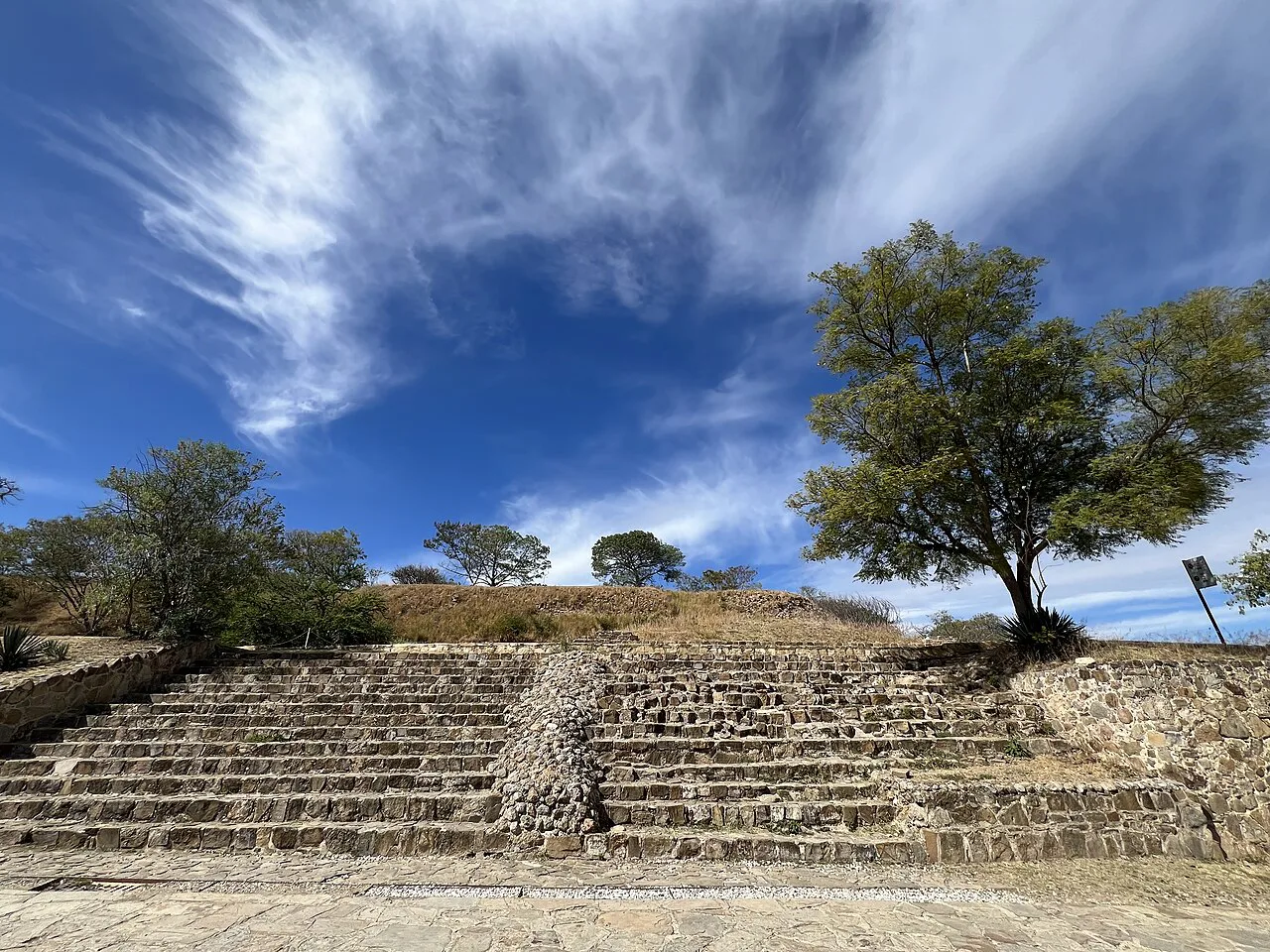
The Grand Plaza: Buildings I, H and G, Building J and the northern temples
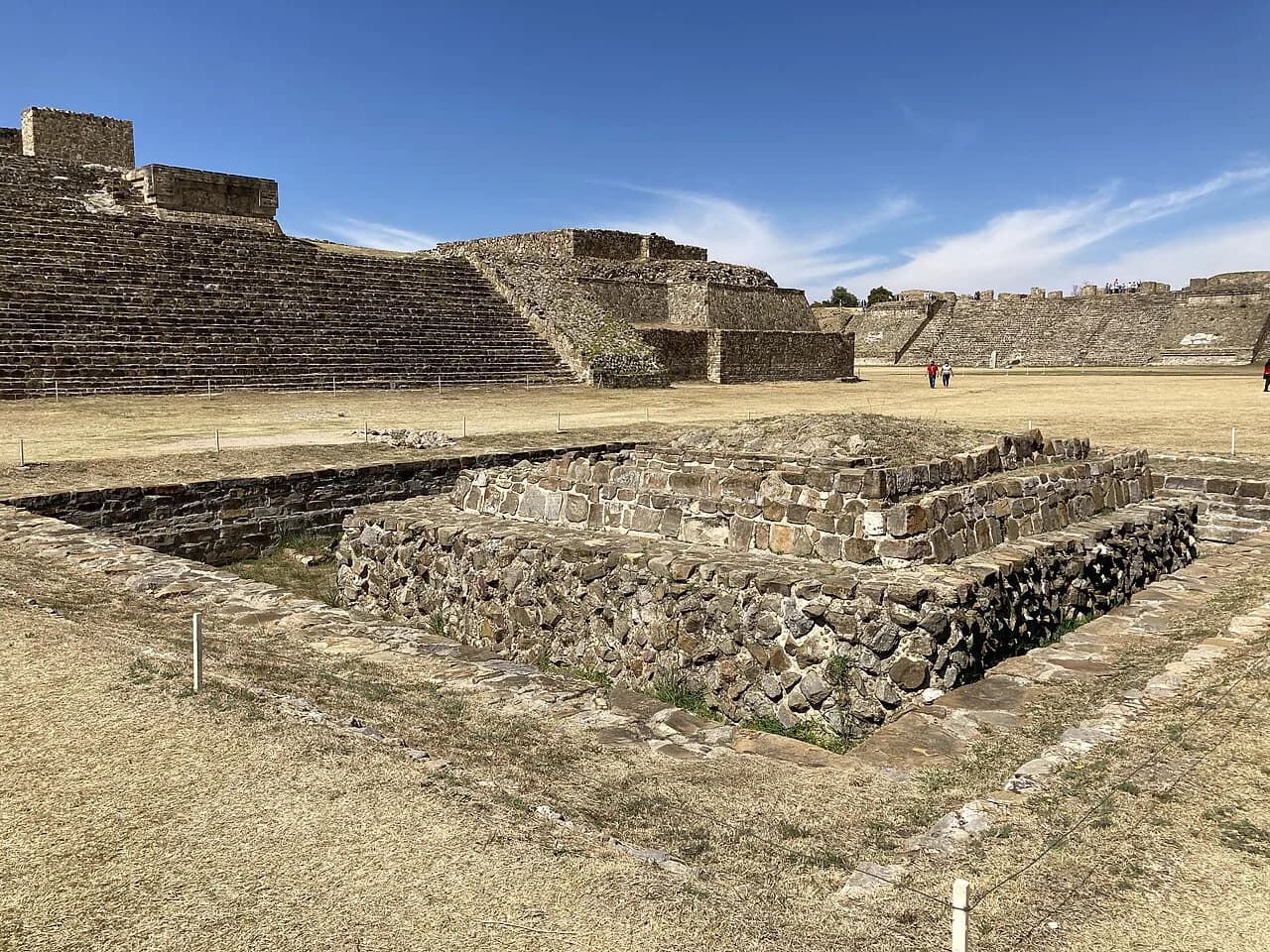
The Grand Plaza is the heart of the visit, a vast square measuring about 200 meters in each direction. Almost everything you will want to photograph frames off it, so start by walking the full length and then double back to the structures. The openness is what lets you take in the scale of the ancient city at once.
Along one side of the plaza, a raised platform carries three central ceremonial buildings known as Buildings I, H and G. At the northern end, a raised area supports more pyramidal temples, with a sunken patio at their base centered on a stone platform. Walk the perimeter first, then climb for the view back across the plaza; the change in perspective is the point of the layout.
Building J is the one to linger at. Shaped something like an arrowhead and set on a different axis from the rest of the north–south city, it is thought to have worked as an early astronomical observatory tracking the star Capella. Stand at its corner and look back along the plaza to see how deliberately it breaks the grid.
Zapotec writing, carved panels and the sunken patio
An educational display near the plaza outlines the evolution of Zapotec writing, which used a series of hieroglyphic symbols. Replicas of original carved panels are set into the slope nearby, preserving what excavation has turned up. Read the panels before you walk the plaza and the stonework stops looking decorative.
The sunken patio at the base of the northern temples, centered on a stone platform, is thought to have been used for ritual activity. Small details like this are easy to stride past on the way to the big pyramids, so slow down at the northern end. Pause at the patio, then climb the temple steps behind it for the widest angle back over the plaza.
Most of what visitors know about the site traces back to the Mexican archaeologist Alfonso Caso, who spent sixteen years excavating Monte Albán. Knowing that gives the stonework and replicas a context: they are the result of a long, piecemeal dig rather than a single designed monument. That context helps explain why the site reads as a layered city rather than a postcard.
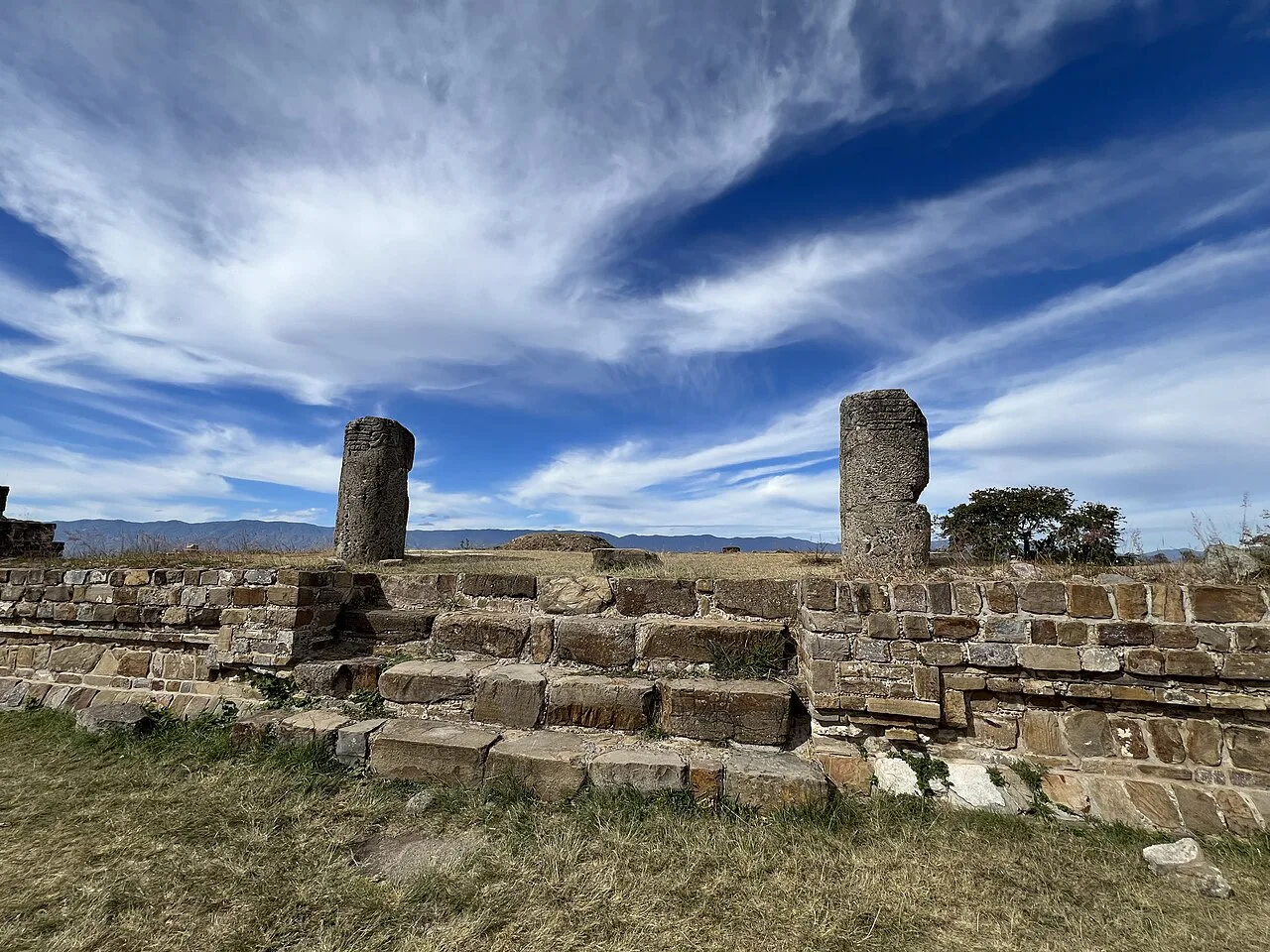
The reservoirs and canals that supplied a mountaintop city
Living on a mountaintop meant solving water first. The Zapotecs built an advanced network of canals and reservoirs, some of which are still visible today, and those structures deserve as much of your attention as the temples. Look for the channels as you move between plaza groups rather than treating the route as a walk between pyramids.
The water system is the practical explanation for why the plateau could hold tens of thousands of people, and it ranks with the flattened hilltop as an engineering feat. Because the channels sit low in the site, you notice them best on the paths between building groups, not from the top of the temples.
How to get there: guided tour from the Zócalo versus making your own way
The simplest approach is a guided tour meeting at the Zócalo, across from the cathedral, which in one account departed at 8 a.m. and reached the site in a minivan in about half an hour. The early start is the real trade-off: you leave the city before it warms up, and the mountain air at that hour is dry and genuinely cold. You trade flexibility for a guide who explains what you are seeing and a ride up the hill.
Going on your own puts you on your own schedule, and the site's size means you can walk it without a fixed pace. The cost is the logistics of getting up the hill and back without a guide's running commentary. Whichever you pick, plan on a walk of a few minutes from where you are dropped or park to the site entrance.
If you have more Oaxaca days, the valley sites pair naturally: Mitla Ruins offer a different, later architectural tradition, and Hierve el Agua is the region's other famous natural stop. Give each of those the same half-day scale you give Monte Albán. For a full day out of Oaxaca City, combine your ruins visit with something from our Oaxaca City guide, then weigh your dinner options with our picks for the best restaurants in Oaxaca.
Opening hours and entry fees: confirm before you go
Plan against official hours and current entry fees by checking the site's published information before your visit day, since these change and no schedule here should be treated as a guarantee. Take enough Mexican pesos in cash for the ticket and for any guide or transport on top. If you are budgeting the trip, ask the ticket window or your tour operator directly rather than relying on older figures.
Sites around Oaxaca also have their own ticket and admission practices, so Don't assume one ticket covers several ruins. For nearby sites like Mitla, check entry terms separately.
How long to allow on site and what the walking involves
Three to four hours covers the Grand Plaza, Building J, the northern temples and the reservoirs at a reasonable pace. The walking is uneven, with steps up temple platforms and unshaded stretches between building groups. If you are short on time, give the plaza and Building J the priority and save the reservoirs for a second pass.
The site spreads across a large plateau and includes hills beyond the core, so you will not see everything on a single visit. Treat your time as a loop rather than a checklist, and leave margin for the walk back to wherever you are meeting your transport.
What to bring for the altitude, sun and morning chill
The elevation and the exposed stone mean you should carry water, sun protection and a hat even on cool mornings. The pre-sunrise mountain air is genuinely cold, as one early tour departure made clear, so bring a layer you can shed once the sun climbs. Wear shoes with tread for the steps and uneven paths.
Pairing Monte Albán with the rest of your Oaxaca days
Back in the city, the Mercado 20 de Noviembre is the natural stop for a late lunch after a morning tour, and the Zócalo area around the cathedral is where many tours start and end. For a different valley outing, Teotitlán del Valle is known for its textiles and works well as a half-day add-on. If the morning ruins leave you hungry for more of the city's cooking, our guide to the best restaurants in Oaxaca picks up where the market stalls leave off.
For pottery and the Árbol del Tule, both lie along the valley roads east of the city and slot into a day that pairs crafts with a landscape stop. If you want one more city day, our list of things to do in Oaxaca de Juárez covers the historic center, markets and museums.
Should Monte Albán be on your Oaxaca itinerary?
Yes, if you have a half day and want to see the Zapotec city, not just hear about it: the plaza, Building J's odd axis, the northern temples and the water works reward a focused morning. Choose a Zócalo tour if you want a guide and an early start, or go independently if you want to set your own pace. Either way, confirm hours and fees directly before you go. If you are comparing it with the country's other ancient sites, our guide to pyramids in Mexico covers Teotihuacan, Chichén Itzá and more.
Explore more Oaxaca guides
- Hierve el Agua
- Mercado 20 de Noviembre
- Mitla Ruins
- San Bartolo Coyotepec
- Teotitlán del Valle
- Árbol del Tule
Frequently Asked Questions
Is Monte Albán Mayan or Aztec?
Neither. The Zapotecs built and occupied Monte Albán more than a thousand years before the Aztec Empire rose, and the Mixtecs later used it as a sacred and administrative center.
Is Monte Albán worth visiting?
For travelers interested in archaeology and views across the Oaxaca Valley, yes: the Grand Plaza, Building J, the northern temples and the reservoir system make a substantial half-day visit. If you are short on time, focus on the plaza and Building J.
Sources
Notes for your next Mexico trip
Optional updates when we add or correct a town guide.
You might also like
Continue reading
More guides you'll find useful