Mexico City Downtown: Historic Center Guide for Visitors
Plan a walk through downtown Mexico City: the Zócalo, the Metropolitan Cathedral, the Palacio Nacional murals, the Torre Latino mirador, and where to eat nearby.
On this page
Downtown Mexico City is the Centro Histórico, the dense grid of streets and plazas wrapped around Plaza de la Constitución, which everyone calls the Zócalo. Budget a half day for the square and the Metropolitan Cathedral, and a full day if you add the Palacio Nacional murals, one museum and the mirador at the Torre Latino. This guide orients you around the square first, then walks west toward Alameda, with the food stops and time budget folded in.
The Centro Histórico occupies 668 blocks and is described as a living organism in near-constant renovation, so storefronts and restaurant lineups shift between visits. Treat the neighborhood as its own district rather than a single sight: you will pass churches, markets, plazas and record shops within a few minutes of walking. Plan the order of stops before you set out, because the distances are short but the distractions are constant, and browse the Mexico City neighborhoods guide if you want to compare areas before you settle on a base.
How the historic center is laid out
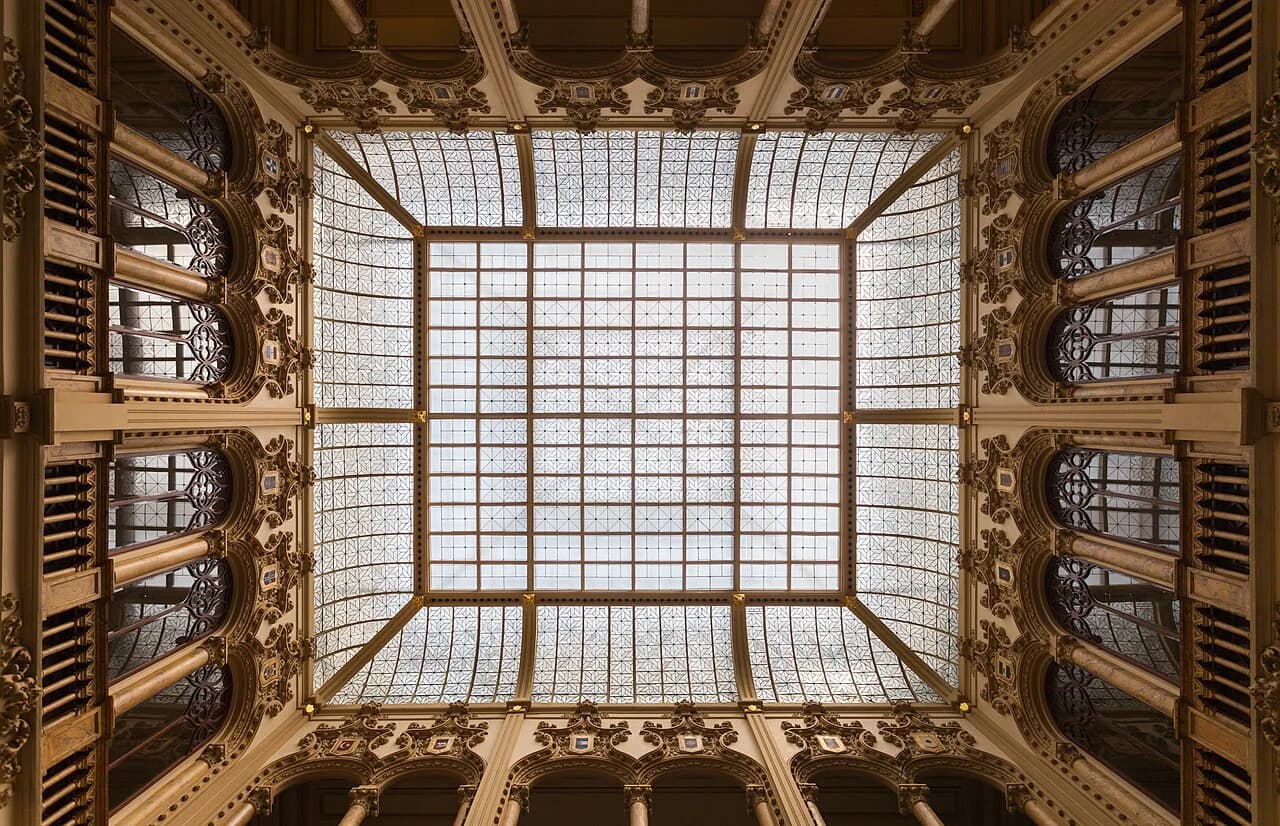
The Zócalo sits at the core. The Metropolitan Cathedral stands on the north side of the plaza, the Palacio Nacional faces it from the east, and the streets run west toward Alameda Central. Calle Isabel la Católica is one of the main north-south spines on the west side of the square, and the Downtown Mexico building sits on it a few blocks down from Plaza de la Constitución, blending 17th-century viceregal style with industrial architecture.
Read the map as three zones before you start walking. The plaza-and-cathedral core takes an hour or two on its own, the Palacio Nacional murals pull you east, and the Alameda end with its museums and the Torre Latino mirador is a longer westward push. Grouping stops by zone saves you from crisscrossing the same blocks all afternoon.
Start at the Zócalo
Stand in the middle of Plaza de la Constitución and turn a full circle: the cathedral fills the north side, the Palacio Nacional runs along the east, and the arcaded commercial buildings close the south and west. The square is the reference point for everything else downtown, so use it to reset your bearings whenever the side streets confuse you. This is also where the scale of the center lands, with the plaza wide enough that crossing it takes several minutes; if you enjoy reading a main square as your anchor, our Guadalajara plaza guide does the same for another city's Centro Histórico.
Walk the perimeter rather than cutting straight across, and you will pass the entrances to the buildings you came for. The Historic Center as a whole ranks among the city's headline landmarks, and the plaza is the piece most visitors see first. Because the center sits well over 2,000 meters above sea level, pace the crossing and the stairs early in the day.
The Metropolitan Cathedral and nearby churches
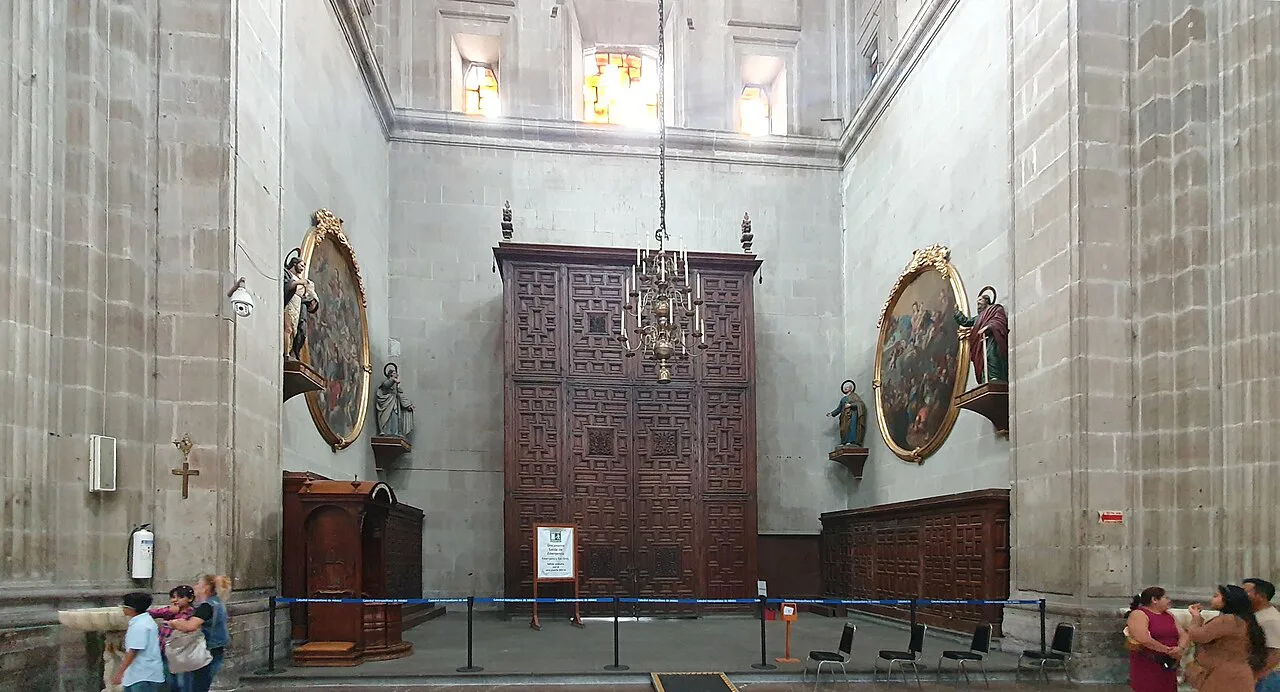
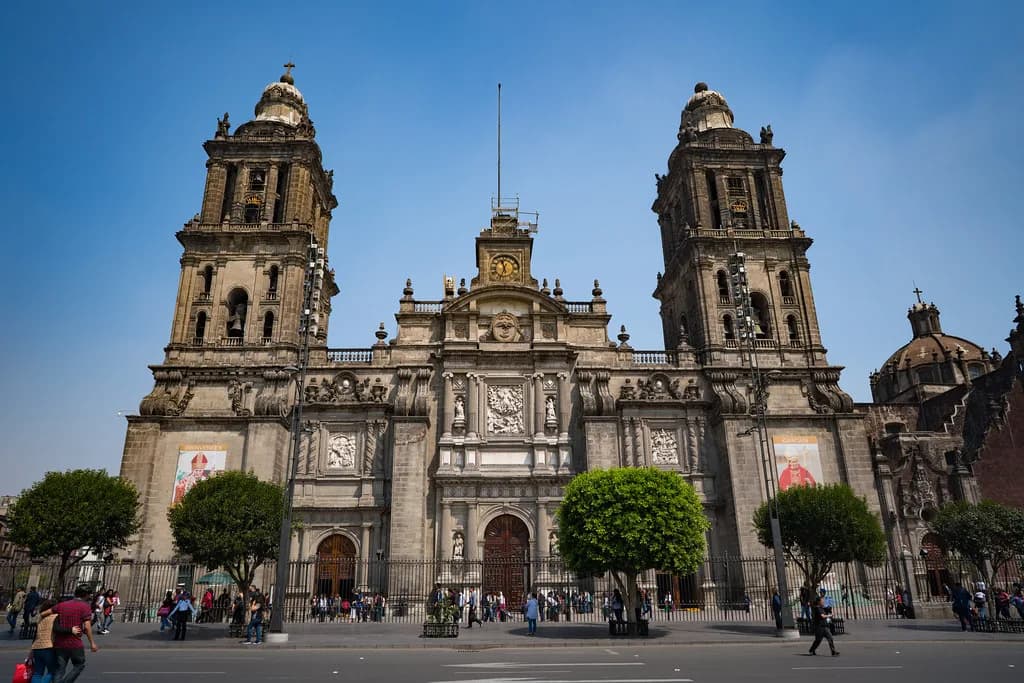
The Metropolitan Cathedral is the anchor sight of the center and the one building to prioritize if your time is short. Step inside for the nave and side chapels, then come back out to the plaza to see how the facade sits against the rest of the square. Give it a solid block of time rather than a quick photo stop.
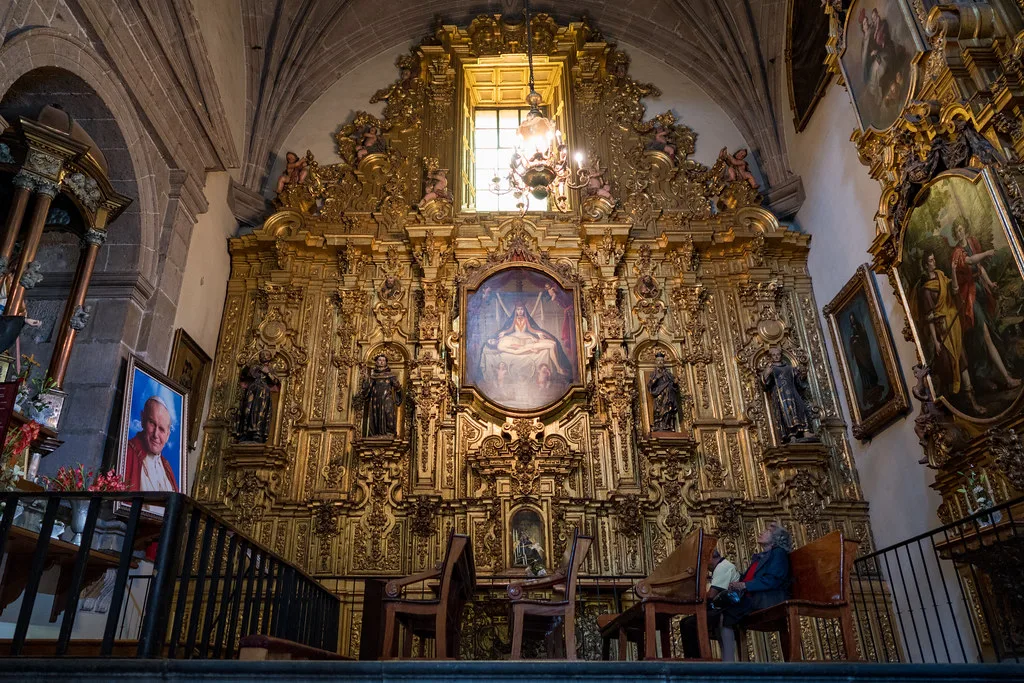
Beyond the cathedral, the center is full of churches worth ducking into as you walk west, and the payoff is the interiors rather than any single famous facade. Check the doorway before you commit: if the doors are open, step in for a few minutes and move on, and if they are shut, keep walking to the next stop. This loose approach keeps the day flexible and lets the streets set the pace.
The Palacio Nacional and the Diego Rivera murals
The Palacio Nacional faces the Zócalo from the east, and its Diego Rivera murals are the reason many visitors cross the square. The murals are the centerpiece of a wider set of wall paintings across the city, so if the line or the timing does not work, you have alternatives elsewhere downtown; the Mexico City Murals guide maps them out. Build the stop into your eastward loop rather than treating it as a separate trip.
Plan the rest of the day around however long this visit takes, then continue south and west. Identify the murals you most want to see before you go in, so you can head straight for them and leave time for the plaza. Pair the stop with the cathedral on the same morning if you want a compact half day.
Museums in the center
The museum that anchors the Alameda end is the Museo Memoria y Tolerancia, a space promoting tolerance through historic memories, set beside the park. It makes a natural stop on the westward leg of the walk and gives you a reason to push past the plaza rather than turning back. Choose one or two museums for the day and skip the rest, since the center holds far more than a single visit can absorb.
If you are choosing which collections to prioritize, the Best Museums in Mexico City guide helps you match the options to your interests before you commit the afternoon. Keep the museum block to the middle of the day when the sun is strongest, then return to the streets in the late afternoon.
Plaza Santo Domingo and the streets around it
Plaza Santo Domingo is one of the smaller plazas north of the main square and a good change of rhythm after the scale of the Zócalo. The surrounding blocks are where the center feels most like a working neighborhood, with print shops and everyday commerce rather than postcard facades. Add it as a loop off the main plaza rather than a destination in itself.
Between the plazas, the side streets hold the smaller finds: sign painters' shops, record stores and markets that reward wandering without a fixed route. Mercado Pino Suárez is one of those stops, a market known for secondhand finds rather than food alone. Allow yourself an hour of unstructured walking and let the map go.
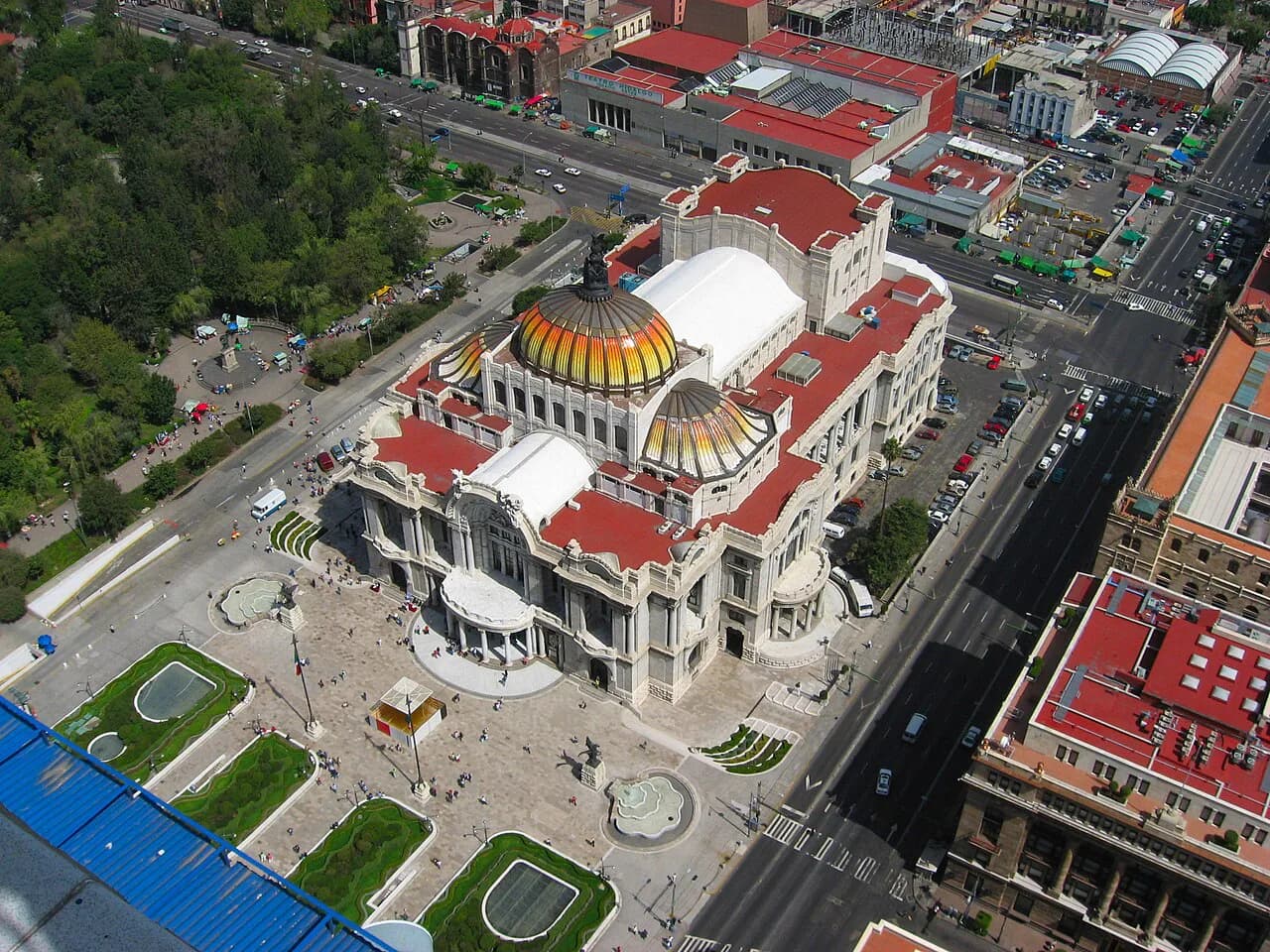
A view from above at the Mirador of the Torre Latino
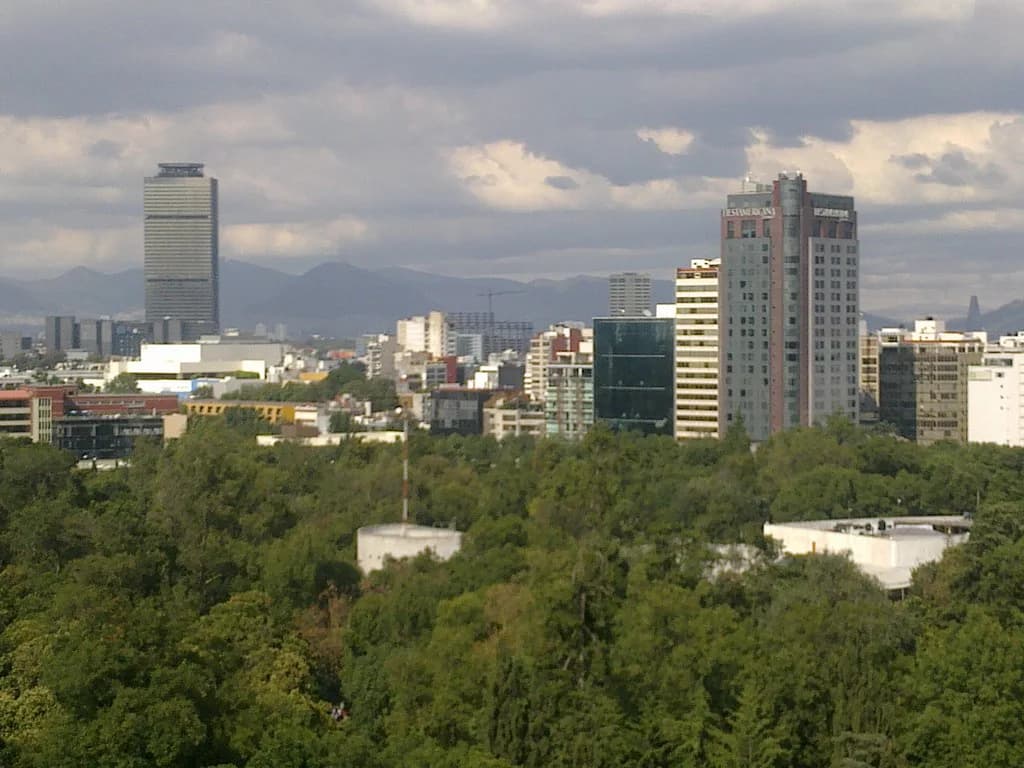
The Torre Latino mirador gives you the whole layout in one look, which is worth doing early so the rest of the walk makes sense. Head up before you tour the streets if the sky is clear, and save the city-level wandering for afterward. The observation deck is the city seen from the sky, with the Zócalo and the cathedral laid out below.
Eat and drink downtown
El Cuatro 20 is a cantina in the Historic Center with draught beer and tacos, including tacos de romeritos and tacos de bistec con salsa verde. It works as a mid-walk lunch stop rather than a destination meal, and you can eat and be back on the street in under an hour. Save the sit-down restaurants for the evening when you have more energy.
Siembra Taquería makes tortillas from scratch from carefully selected corn, and there is no reservation needed because it is a casual taco counter. Azul Histórico serves more classic, traditional Mexican food, and its location in the historic center makes it easy to reach on foot. Limosneros takes a more contemporary line on Mexican ingredients and is the sort of table you should reserve.
For something sweet, El Moro sells churros by the meter, a simple stop that fits easily between sights. Balcón del Zócalo is a stylish spot for regional dishes and a terrace looking over the plaza, though you need a reservation to get a table with the view. Reserve ahead if the terrace is the reason you are going.
El 123 brings together Asian flavors, a vintage feel and a mixed crowd, and Cafe Regina has a bohemian coffee-shop atmosphere, so both suit a break rather than a full meal. Pick your stops by where you are when hunger hits rather than by the map, since the center's blocks are short and options are dense.
How long downtown needs
A half day covers the Zócalo and the cathedral comfortably, with time for coffee and a loop around the plaza. A full day adds the Palacio Nacional murals, one museum near Alameda and the Torre Latino mirador, which is the version most first-time visitors should choose. The center rewards a slower pace than a checklist allows.
If you have a second day, split the center across two mornings instead of forcing everything into one. Use the first for the plaza, cathedral and Palacio Nacional, and the second for the Alameda museums, Plaza Santo Domingo and the mirador. That split keeps the walking manageable and leaves room for meals.
Getting around downtown and reaching it
The center is a walking district, and most of the sights between the Zócalo and Alameda sit within a short stroll of each other. Use the Metro, a taxi or a ride-hailing app to get to the edge of the center, then walk from there rather than trying to drive between stops. La Reforma and Alameda sit at the western end of the district, so the park is a natural finishing point.
Cash, sun and altitude in the center
Carry cash in small notes for tacos, churros and market stalls, since the center's cheap eats move fast and card machines slow a queue down. Wear a hat and drink water as you cross the plazas; the altitude sits over 2,000 meters and the open square offers little shade in the middle of the day. Avoid jeans on the hottest afternoons and choose lighter clothing that handles the sun.
Where to go next
After the center, head west to La Reforma for a bike ride or a wide avenue walk, and use the Alameda as the bridge between the two. Museums, murals and the Torre Latino are the natural next stops if you are staying downtown. The parks around Alameda and Bosque de Chapultepec give you a green break from the stone.
To the south, Coyoacán offers a different neighborhood rhythm with its own market and plaza food scene, including the Mercado de Comida de Coyoacán. Give it a separate half day rather than squeezing it into the center itinerary. Read the rest of the Mexico City Attractions: 5 Visitor Guides before you plan the next neighborhood.
One day or two downtown?
One full day is enough to see the Zócalo, the cathedral, the Palacio Nacional murals and the Torre Latino mirador, with a taco or churro stop in between. Stretch it to two days if you want the Alameda museums, Plaza Santo Domingo and a relaxed meal at Azul Histórico. Build the walk west from the plaza and you will end near La Reforma with the day still in hand.
Explore more Mexico City guides
- Best Museums in Mexico City
- Lucha Libre in Mexico City
- Mexico City Murals
- Mexico City Parks
- Mexico City Walking Tour
Frequently Asked Questions
Can you walk around downtown Mexico City at night?
The center is a walking district by day, but the plan for the evening should center on specific destinations rather than a broad loop. Choose a restaurant on Calle Isabel la Católica or a terrace overlooking the Zócalo, and take a taxi or ride-hailing car back to your base instead of wandering. Check with your accommodation about the route you intend to use.
Do you need a tour guide for the historic center?
No, the Zócalo and the cathedral sit within a few minutes of each other and are easy to find on foot. A guided walk adds context to the churches and the murals, but it is optional for first-time visitors who prefer to go at their own pace. Book any tour before you arrive if you want a specific guide.
Where do you eat downtown near the Zócalo?
El Cuatro 20 serves tacos and beer in the Historic Center, Azul Histórico serves classic Mexican food nearby, and Balcón del Zócalo has a terrace over the plaza that needs a reservation. El Moro is the churro stop, and Siembra Taquería handles a quick taco fix without a booking. Plan lunch around the plaza and dinner after the walking is done.
Sources
Notes for your next Mexico trip
Optional updates when we add or correct a town guide.
You might also like
Continue reading
More guides you'll find useful