Day Trips from Mexico City: 12 Places Worth the Trip
Plan day trips from Mexico City by travel time: Teotihuacan, Xochimilco, Puebla and Cholula, Tepoztlán, Taxco and more, with bus, Metro and car access.
On this page
Start with Teotihuacan and Xochimilco: they are the two trips that fit comfortably into a single day from the center of Mexico City, and together they cover the region's biggest ruins and its strangest boat ride. Everything else on this list is a longer commitment, so it helps to sort the options by travel time before you read twelve entries. The trips below are grouped as roughly an hour out, two to three hours out, and hiking days, with the bus stations, Metro connections and tour formats that reach each one.
How to Choose a Day Trip from Mexico City
The useful split is time, not theme. Teotihuacan, Xochimilco and Tepoztlán sit about an hour from the city, while Puebla, Cholula, Taxco, Tepotzotlán, the Grutas Tolantongo, San Miguel de Allende and Querétaro each take two to three hours of driving in one direction. Decide how much of the day you are willing to spend in transit, then pick the destination that fits the hours left.
The second choice is what you want to look at. Ruins pull you to Teotihuacan, Tula and the hilltop temple above Tepoztlán; colonial streets pull you to Puebla, Taxco, San Miguel de Allende and Querétaro; water pulls you to the Xochimilco canals, the Tolantongo hot springs and the lake at Valle de Bravo. Travelers who want a guided overview rather than a self-built itinerary can compare formats in Mexico city tours before committing.
Whichever you choose, leave early. The two big bus terminals, Autobuses del Norte in the north and Taxqueña in the south, are the departure points for the pyramids and for Tepoztlán, and both connect to the Metro. A hat, sunscreen and a refillable bottle matter more than a packed schedule on the exposed archaeological sites.
Teotihuacan: The Pyramids and the Avenue of the Dead
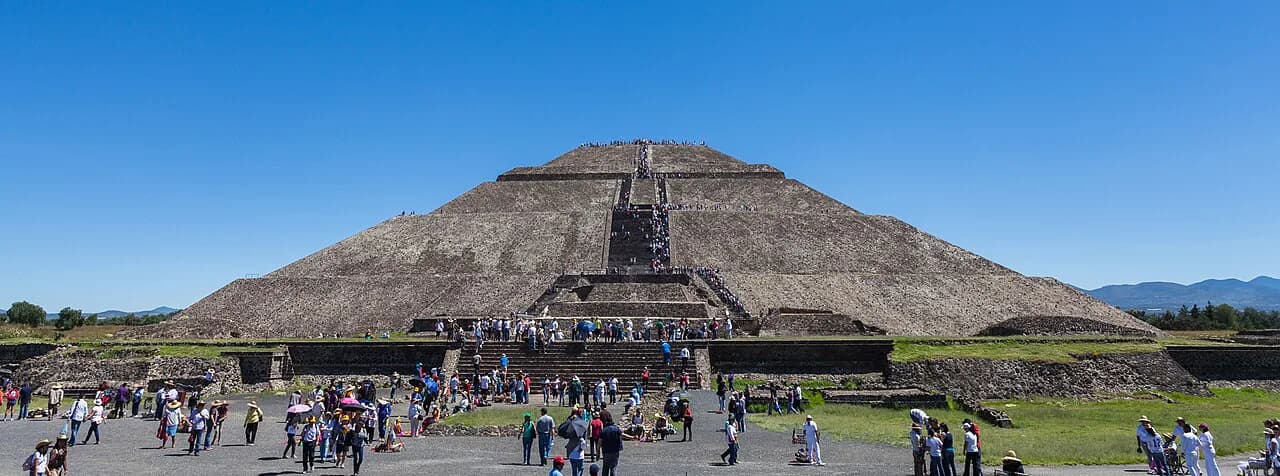
Teotihuacan is the trip to take if you only have one free day. You enter on the Avenue of the Dead and walk between the Pyramid of the Sun and the Pyramid of the Moon, with the Temple of Quetzalcoatl and the site museum, the Museo del Sitio, filling out a half day or more. Climbing the pyramids is no longer allowed, so budget your time for walking the avenues and reading the plaques rather than for a summit view. The wider catalog of Mexico city pyramids covers what else is within reach if you want a second ruins day.
To get there on your own, take the direct bus from the Autobuses del Norte station, which leaves from the area around sala 8 and takes about an hour; in 2025 a ticket ran around 100 MXN, roughly $6. Admission was listed at 85 MXN in the same year, with children under 13 free, and none of those figures should be treated as today's price. Alternatively, a ride-hailing car the whole way was estimated at around 500 pesos in 2025.
A guided tour solves the transport question and usually bundles in other stops. One group tour adds a visit to the Shrine of Guadalupe, the Tlatelolco site and a tequila tasting for about $60 per person when booked online in advance in 2025, and includes an hour with a guide inside the archaeological zone followed by free time. If you would rather see the ruins from above, a Mexico city hot air balloon flight leaves before sunrise and requires a very early start.
Two practical notes shape the day. The site has no shade at midday, so a hat and sunscreen are not optional in the warmer months. Monday works well because the city's other museums tend to be closed that day, which frees up a different slot in your itinerary for the anthropology collections downtown.
Xochimilco: The Canals and the Trajineras
Xochimilco sits in the south of the city, a maze of waterways where the draw is a ride on a trajinera, the brightly painted boat hired by a group with a driver. Floating vendors sell drinks and snacks alongside, and mariachi bands can be hired to play from a neighboring boat. It pairs naturally with the Coyoacán and San Ángel neighborhoods, which are close enough to combine into one Saturday.
Getting there is straightforward without a car. Ride-hailing is the easiest option, quoted at around 300 pesos in 2025, while public transport means Metro Line 2 to Tasqueña followed by the Xochimilco Light Rail for a few pesos. Keep small bills for the boat and the vendors.
Eat with some judgment. Buy mango and drinks from the boats, but leave the hot food, especially meat, alone, since it may sit unrefrigerated, and eat quesadillas and tlacoyos at the restaurants on the banks instead. A sunrise kayak trip on the quiet water is the alternative for early risers.
Tepoztlán and Tepotzotlán: Two Towns, Not One
The two names look alike and sit on opposite sides of the city. Tepoztlán, south of Mexico City, has a market known for pre-Hispanic dishes, the Convent of Tepoztlán and backstreets full of street art, plus a hike to the El Tepozteco pyramid on the hill above town that takes 30 minutes to an hour. Regular buses with Pullman de Morelos and OCC leave from the Taxqueña station and take about an hour.
Tepotzotlán, north in the State of Mexico, has less to fill a day and a longer ride. The reason to go is the Museum of Virreinato and Church of San Francisco Javier complex, which in 2025 charged 90 pesos for the whole property including the gardens. Add the giant Jesus statue in the Zócalo, the stalls on the same square and a meal at the Municipal Market, or breakfast and coffee at Casa Quintal.
Puebla and Cholula
Puebla state gives you two stops in one outing: the colonial center of Puebla and the archaeological zone and churches of Cholula. The combined ride is two to three hours each way, which is why most travelers book it as a guided day with pickup in Mexico City rather than building the route themselves. A guided day trip to Cholula and Puebla appears among the most-booked options on major booking platforms.
If you go independently, treat it as a full day and check bus times from the city's terminals the day before, since return schedules set your real limit. Either way, save room for a meal in Puebla rather than eating on the road.
Taxco and Cuernavaca
Taxco, the silver town, is usually done as a full-day tour, and many operators pair it with Cuernavaca on the same loop. Bookings for the Cuernavaca and Taxco combination and for a standalone Taxco tour both appear on the major platforms, with free cancellation offered on several departures. The distance makes a self-drive version a long day; a tour removes the return-leg guesswork.
Grutas Tolantongo Hot Springs
The hot springs on the side of a mountain are the trip for travelers who want water and cliffs rather than churches. Because the site is remote, most visitors go on a tour or buy a transport-and-tickets package from Mexico City that covers the ride in and the entrance. Options listed as Tolantongo Caves full-day trips, and a separate transport-and-tickets product, both appear on booking platforms.
Confirm what the package includes before you pay: transport, entrance and whether meals are covered vary by product, and the listings spell this out per tour. Bring a change of clothes and a towel, and expect a long day in the vehicle.
San Miguel de Allende and Querétaro
These two colonial cities suit travelers willing to spend two to three hours each way. San Miguel de Allende is the colorful, walkable one, best explored on foot through its sloping streets; Querétaro is the larger city, useful as a second stop or a separate day. Both reward an overnight if your schedule allows it, since the ride eats a large share of a single day. From Querétaro, the 433-meter monolith of Peña de Bernal is about 45 minutes away.
Tula, Pachuca, Valle de Bravo and Malinalco
On the northern side of the city, the Tula ruins and Pachuca make lower-key alternatives to the big-name sites, with fewer tour buses and shorter lines. West of the city, Valle de Bravo is a lake town that also draws paragliders, with instructor-led flights offering a view from above, and Malinalco is a smaller town with archaeological remains of its own. These work well as a second or third day out.
The Monarch Butterfly Sanctuaries
The butterfly trip only makes sense during the migration window, which runs from November to March. Outside those months there is nothing to see, so do not slot a sanctuary visit into a summer itinerary. Day trips to the monarch butterfly sanctuaries are sold from Mexico City during the season, and the operators publish their own departure details.
Hiking Days: Iztaccíhuatl, Nevado de Toluca and Los Dinamos
For a hiking day rather than a town, the guided ascent of Iztaccíhuatl Volcano is the classic, and Nevado de Toluca is the other volcano option sold as a tour and hike from the city. Both are high-altitude outings that require an early departure and a booked guide. Closer in, Los Dinamos and the Ex Convento Desierto de los Leones give you a wooded half day on the city's western edge without a long drive.
Getting Around Without a Car
Two bus terminals do most of the work. Autobuses del Norte sends you to Teotihuacan, and Taxqueña handles Tepoztlán through Pullman de Morelos and OCC, with Metro Line 2 linking to the southern station and the Xochimilco Light Rail. Ride-hailing covers the gaps, including the run to Xochimilco, and guided tours cover everything else.
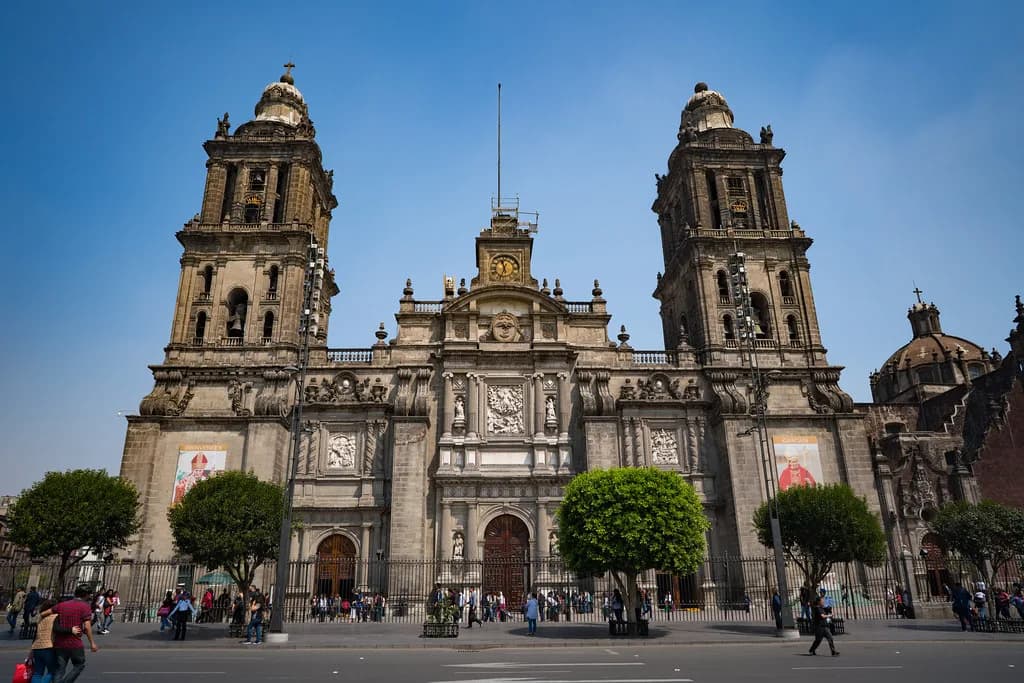
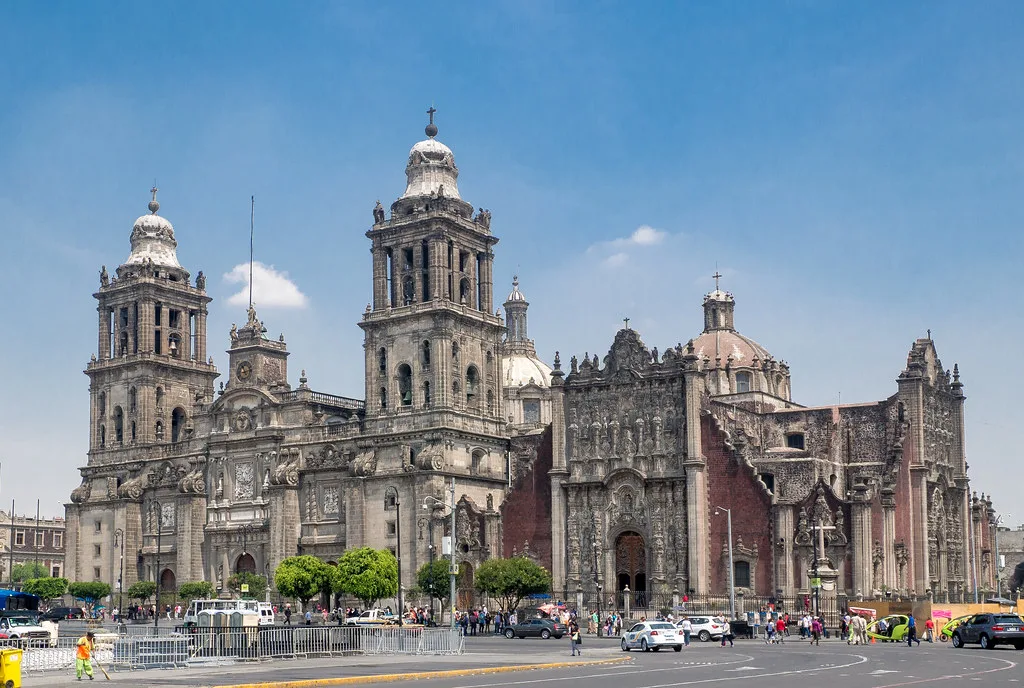
Pay attention to the return leg. Buy your return ticket when you arrive at the destination, or confirm the last departure before you commit to a late lunch, because the schedule sets how long you can stay. For a broader view of what the city itself holds, the Mexico City Attractions: 5 Visitor Guides collection covers the downtown sights, including the Metropolitan Cathedral, that fill your non-trip days.
Matching a Day Trip to Your Trip Length
With three or four days in the city, keep the short trips for the middle of your stay and use the first day for the center. Teotihuacan and Xochimilco each take a full day once you count transport, so two of your days are already spoken for. Save Puebla, Taxco or the Tolantongo hot springs for a longer visit, or accept that you will leave before sunrise and return after dark.
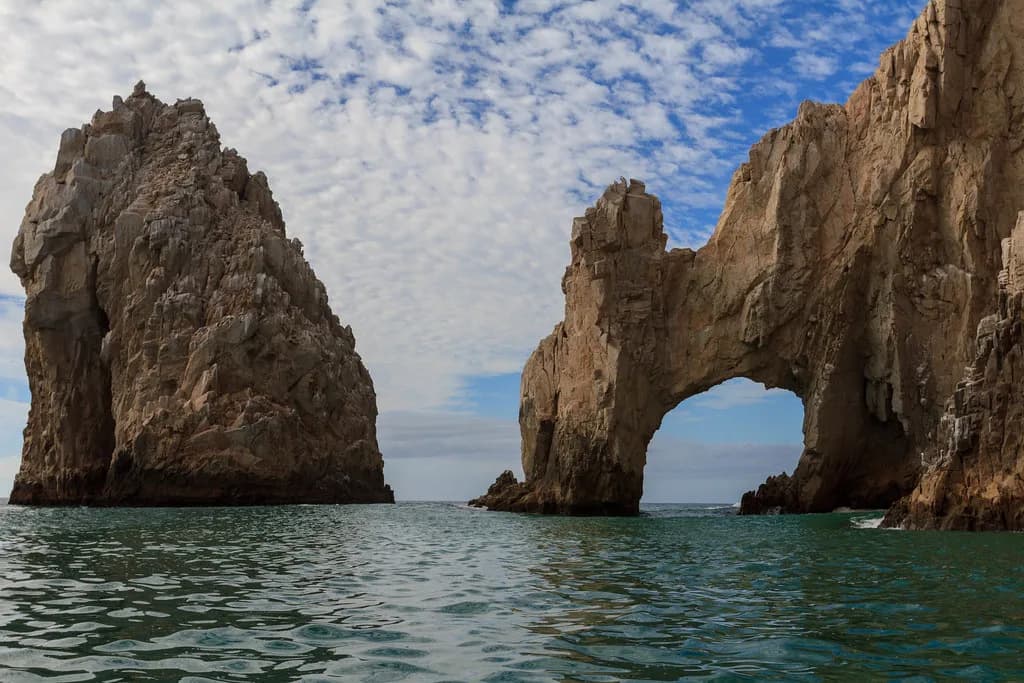
If you are comparing this city with other bases in Mexico, the same logic of travel time applies elsewhere, and day trips from Cabo San Lucas shows how a coastal base spreads its options. The short version is the same in both places: pick by hours in transit first, then by what you want to see.
Which Day Trip Should You Book First?
Book Teotihuacan first if you have not seen it, and take the early bus from Autobuses del Norte or a guided tour that includes the site. Add Xochimilco on a separate day with a ride-hailing car or the Metro and light rail, and keep the hot food for the restaurants on the banks.
Only after those two should you consider the two- to three-hour rides to Puebla, Taxco, the Tolantongo hot springs or San Miguel de Allende. Those are worth an overnight or a dedicated long day, and leaving before sunrise is the price of doing them from the city.
Explore more Mexico City guides
- Hot Air Balloon Over Teotihuacan from Mexico City
- Mexico City Boat Tours
- Mexico City Pyramids
- Mexico City Tours
Frequently Asked Questions
Can you still climb the pyramids at Teotihuacan?
No. Climbing the pyramids at Teotihuacan is no longer allowed, so plan your visit around walking the Avenue of the Dead between the Pyramid of the Sun and the Pyramid of the Moon, plus the Temple of Quetzalcoatl and the Museo del Sitio.
Should you take the bus or a tour to Teotihuacan?
The direct bus from Autobuses del Norte is the cheapest route and takes about an hour, while a tour adds a guide inside the site and often bundles stops such as the Shrine of Guadalupe and Tlatelolco. Choose the bus if you want control over your hours and a tour if you want the logistics handled.
How early do you need to leave Mexico City for a full-day trip?
For Teotihuacan, catching an early bus or joining a tour that departs in the morning leaves enough time for the site and the return. For Puebla, Taxco, the Tolantongo hot springs or San Miguel de Allende, plan on leaving before sunrise, since each involves two to three hours of driving in one direction.
Sources
Notes for your next Mexico trip
Optional updates when we add or correct a town guide.
You might also like
Continue reading
More guides you'll find useful