Peña de Bernal: Climb, Hike, and What to Do in Bernal
Peña de Bernal is a 433-meter monolith above the pueblo Mágico of Bernal. Here is the hike, the town's food stops, and how to reach it from Querétaro.
On this page
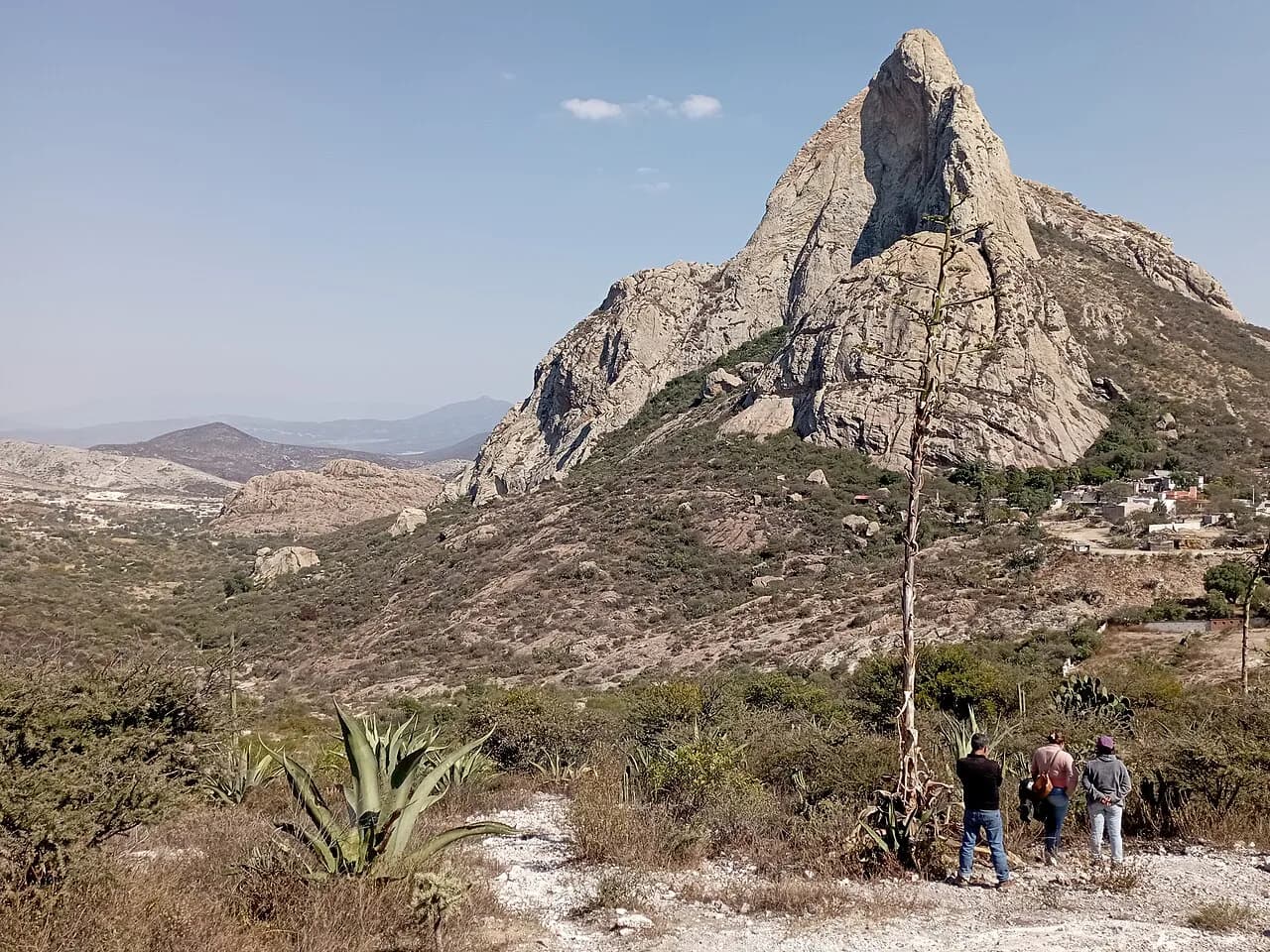
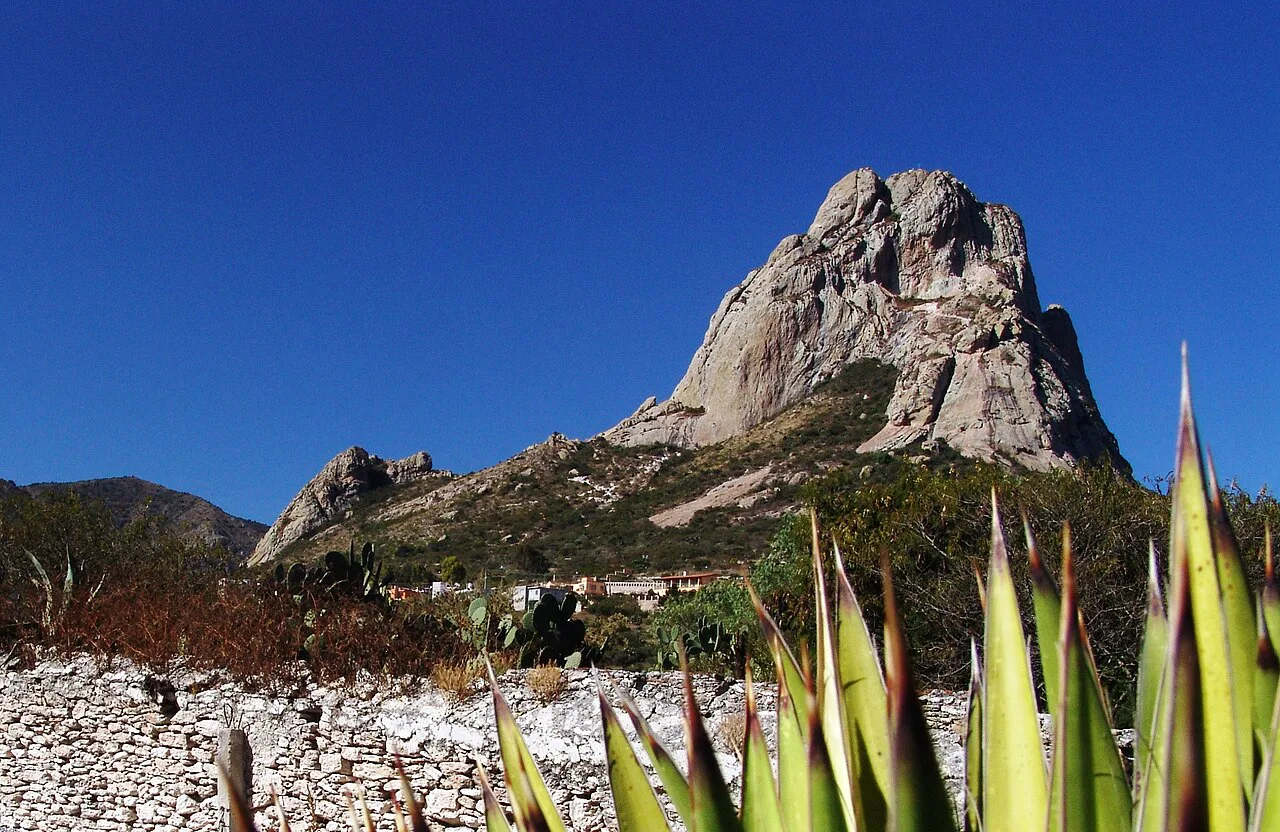
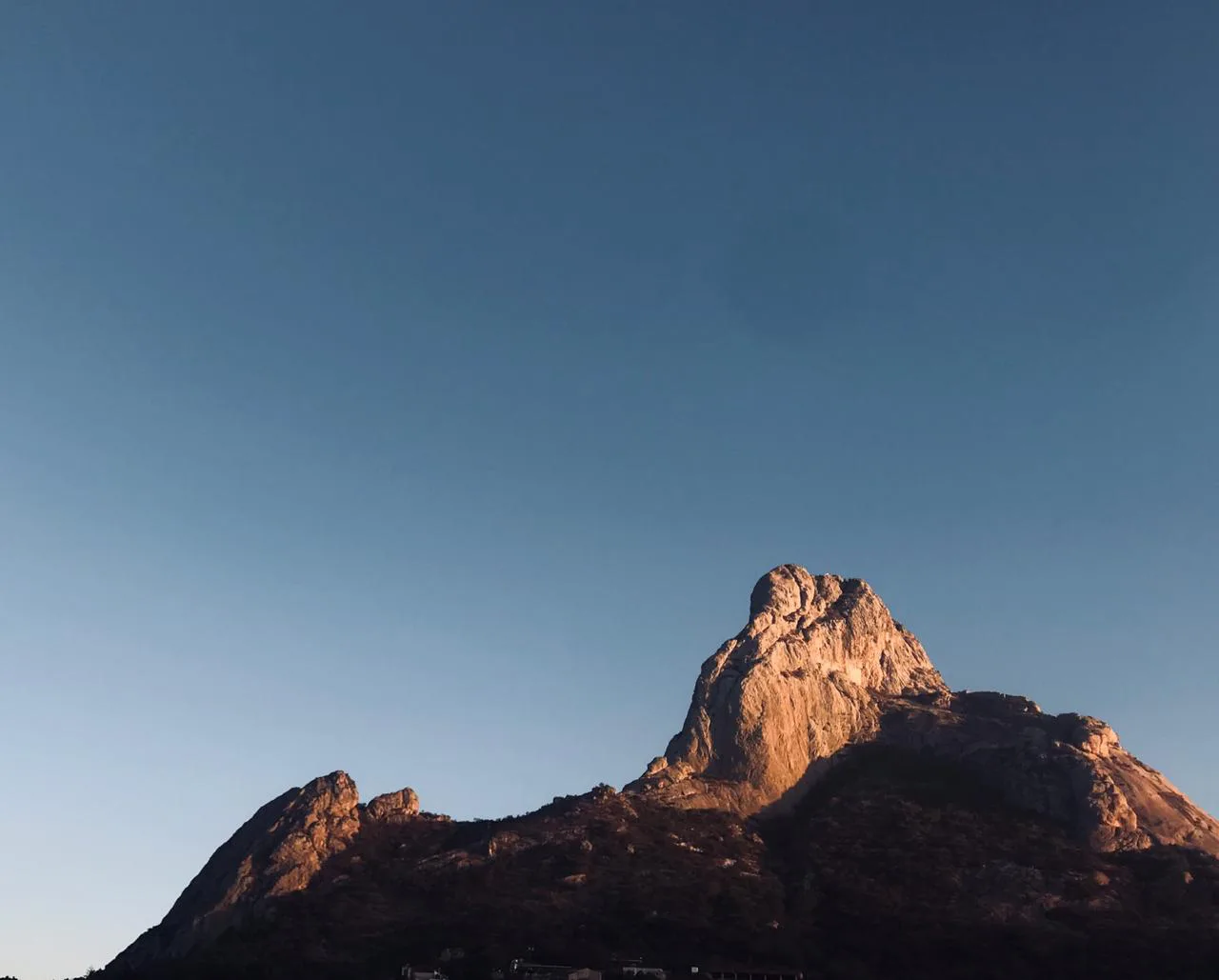
Peña de Bernal is a 433-meter (1,421-foot) monolith, one of the tallest in the world, standing directly over the small town of San Sebastián Bernal in Querétaro state. You have three ways to experience it: walk up to a halfway viewpoint on your own, hire a guide with equipment to go higher and rappel down, or stay in town and admire the rock from the plaza and the food stalls. This guide covers the hike, the town's dishes and museums, and the drive from Querétaro or Mexico City.
Bernal sits about 45 minutes from the center of Santiago de Querétaro, which makes it an easy day trip rather than an overnight commitment. Half a day covers the hike and a plate of gorditas; a full day lets you add the museums, the sweets shops, and a slow walk through the streets. Travelers with a second day can use the town as a base for Cuatro Palos and the Sierra Gorda Biosphere Reserve.
What Peña de Bernal is
The rock itself is the exposed core of an ancient volcano: lava solidified inside the cone, and the softer outer layers eroded away over millions of years, leaving the hardened magma as the monolith you see today. Chemical analysis by researchers at the National Autonomous University of Mexico dates its formation to roughly 8.7 million years ago, considerably younger than the Jurassic age once assumed. Read it as a geological feature first and a photo backdrop second.
For the Otomí and Chichimeca communities living around Bernal, the monolith is sacred, and UNESCO recognized their traditions as Intangible Cultural Heritage of Humanity. They make an annual pilgrimage to pray for water in this semi-desert region, and their influence shows up in the town's food and wool handicrafts. Keep that context in mind as you walk up; the trail is a route through a living cultural landscape, not just a summit.
Where Bernal sits
Bernal is a pueblo Mágico in the municipality of Ezequiel Montes, in the semi-desert north of Querétaro state. The town's streets climb gently toward the rock, and the monolith stays in view from most of the center, which makes orientation simple. You do not need a car once you arrive; the park entrance sits on the northern edge of town within walking distance of most of the center.
The drive from Santiago de Querétaro takes about 40 to 45 minutes, depending on where in the city you start. That puts Bernal in day-trip range from the state capital and pairs well with a stop in the surrounding countryside on the way back. If you are coming from farther afield, plan Bernal as one stop on a central Mexico loop rather than a standalone destination.
Hiking the monolith
Walk to the park entrance on the northern edge of town, pay the entrance fee, and head up the stepped path on your own. The first stretch is a series of steps that are relatively easy to navigate. The reported fee is 30 pesos with hours of 8 am to 5 pm daily; confirm the current fee and closing time at the gate before you start, since both can change.
Allow about 45 minutes to reach the broad viewpoint roughly halfway up, which is as far as you can go without technical equipment. The steps give way to rougher ground after about 30 minutes, and many visitors stop at that ledge for the view across the valley. Sturdy shoes make the difference here; sandals and smooth soles are a poor match for the loose, sloping rock near the top of the public section.
Above the viewpoint, the sources describe a thick metal rope that assists a short scramble, with a small chapel at the highest point accessible on the hiking trail, where pilgrims stop to pray for water. Treat the upper section as optional and turn around if the rock is wet or crowded. The chapel is a pilgrimage site, so keep voices low and give people room to pray.
Climbing to the summit with a guide
The true summit is not on the hiking path. Reaching it requires a guide who supplies the experience and the equipment, and the descent is done by rappelling down the rock. Book through an established operator rather than arranging a climb informally at the trailhead; the trip involves ropes and exposure where a qualified guide matters.
Guided climbing trips in the area run routes for beginners and for experienced climbers. The source notes that guided tours of the region are advertised starting around 80 USD, which is a booking reference for area tours rather than a confirmed rate for a summit climb. Ask what the trip covers, whether harness, helmet and rope are included, and how many people share a guide, and confirm the total directly with the operator.
What to eat in town
Gorditas are the standard post-hike food: food stalls near the trail and around the center fill thick masa pockets with stews and griddle them to order. Go early if you want to catch the stalls just as they open, since the busiest ones draw a line by mid-morning. Pay in cash and carry small bills; the stalls are not set up for cards.
Two local specialties are worth seeking out beyond the gorditas. Pan de queso is a savory cheese bread sold in town bakeries, and nopal en penca is a stuffed cactus pad, a dish that reflects the semi-desert agriculture around Bernal. Both are cheap, portable, and a better introduction to the local kitchen than a generic restaurant plate.
Museo de la Máscara, wool handicrafts, and the Museo del Dulce
The Museo de la Máscara is a small mask museum that fits into an hour between the hike and lunch. Regional wool handicrafts sold around town reflect the Otomí and Chichimeca presence in the area. Ask what the piece is made of before you commit.
The Museo del Dulce covers the town's typical sweets and is a low-effort stop after the climb. Pair it with a look at the dancing fountain of La Peña de Bernal, a lit water feature in town that gives the center a gathering point in the evening.
If your tastes run to architecture and craft towns, the region rewards a longer loop. Real de Catorce, a former mining Pueblo Mágico in San Luis Potosí, and Xilitla, with Edward James's Surrealist garden, both sit on routes that pair with central Mexico road trips.
Getting to Bernal from Querétaro
You have four practical options from Querétaro: a guided tour, a rental car, ride-hailing, or a bus. A tour removes the logistics and usually bundles the town and the hike, but locks you into a fixed schedule. A rental car gives you the most flexibility for combining Bernal with nearby stops such as Cuatro Palos, while ride-hailing works for a straightforward out-and-back if you are comfortable relying on a return car.
The bus is the cheapest route and drops you in town, from where the trailhead is a short walk. Schedules and fares vary by operator, so check the terminal counters or the operator's own listing for the day you travel rather than relying on a posted timetable. If you take a tour, read what it covers: some include the park entrance fee and others leave it to you.
Getting to Bernal from Mexico City
From Mexico City, the same four choices apply, plus the option of a day tour that handles the roughly three-hour drive each way. A bus from the capital's main terminals is the budget option, with a change or a through service depending on the operator. A rental car makes sense if you want to add stops in Querétaro or the Sierra Gorda on the same trip.
If you are building a multi-day route, consider pairing Bernal with Dolores Hidalgo, Guanajuato, and the Sanctuary of Atotonilco near San Miguel de Allende; all three sit within a comfortable driving loop of Querétaro.
How much time Bernal needs
Half a day covers the essentials: the drive from Querétaro, the walk to the halfway viewpoint, and a plate of gorditas on the way down. A full day lets you add the Museo de la Máscara, the Museo del Dulce, the wool stalls, and a slow pass through the center. Aim to start early; the trail is exposed and the park closes in the late afternoon, so a midday start leaves little margin.
With a second day, use Bernal as a base for Cuatro Palos and the Sierra Gorda Biosphere Reserve, both of which reward a full day of driving and walking. The monolith is the reason most people come, but the surrounding semi-desert country is the reason to stay longer.
Hike to the viewpoint or book a summit guide?
Choose the self-guided hike if you want the classic view, a plate of gorditas, and a half-day out of Querétaro without equipment or a booking. Choose a guided summit climb only if you want the exposure, the rope work, and the rappel, and you are willing to pay for a qualified guide. Everyone else should treat the halfway viewpoint as the destination and spend the saved time in town.
Sort out transport before you commit to a start time, since the drive from Querétaro takes about 45 minutes and the park day runs from morning to late afternoon. Whichever route you pick, the town's food stalls, museums, and plaza make the trip worth the drive even if the weather keeps you off the rock.
Explore more Queretaro guides
- Dolores Hidalgo
- Mineral de Pozos
- Real de Catorce
- Xilitla: Edward James's Surrealist Garden and How to Visit
Frequently Asked Questions
Can you climb Peña de Bernal?
You can hike the stepped path on your own to a broad viewpoint roughly halfway up, which takes about 45 minutes and is as far as you can go without equipment. The true summit requires a guide who supplies ropes and gear, with a rappel on the way down.
How tall is Peña de Bernal?
The monolith rises 433 meters, or about 1,421 feet, above the town of San Sebastián Bernal. It sits in the municipality of Ezequiel Montes in Querétaro state, and its summit reaches about 2,510 meters above sea level.
Is Peña de Bernal a volcano?
It is the exposed core of an ancient volcano rather than an active one. Lava solidified inside the cone, the softer outer rock eroded away, and chemical analysis by researchers at the National Autonomous University of Mexico puts the formation at roughly 8.7 million years ago.
Do you need to book in advance to visit La Peña de Bernal?
No booking is needed to hike the public path; you pay the entrance fee at the park gate and walk up. A summit climb is different, since it requires a guide and equipment, and those trips should be arranged with an operator before you arrive.
Sources
Notes for your next Mexico trip
Optional updates when we add or correct a town guide.
You might also like
Continue reading
More guides you'll find useful