Tulum Ruins: What to See, Fees, Hours and How Long to Allow
Plan a visit to the Tulum ruins: which structures to see, how to get there from town, when to arrive ahead of the tour buses, and how long to allow.
On this page
Give the Tulum ruins two hours for a walk through the walled site, or most of a morning if you plan to descend the cliff stairs to Playa Ruinas and swim. The ruins sit on a bluff above the Caribbean, roughly 10 minutes from Tulum town and about a 45-minute drive from Playa del Carmen. This guide covers the individual structures, the routes in from town and from Cancún, the arrival window that keeps you ahead of the tour groups, and the trade-offs of the beach descent.
Where the ruins sit and how the site is laid out
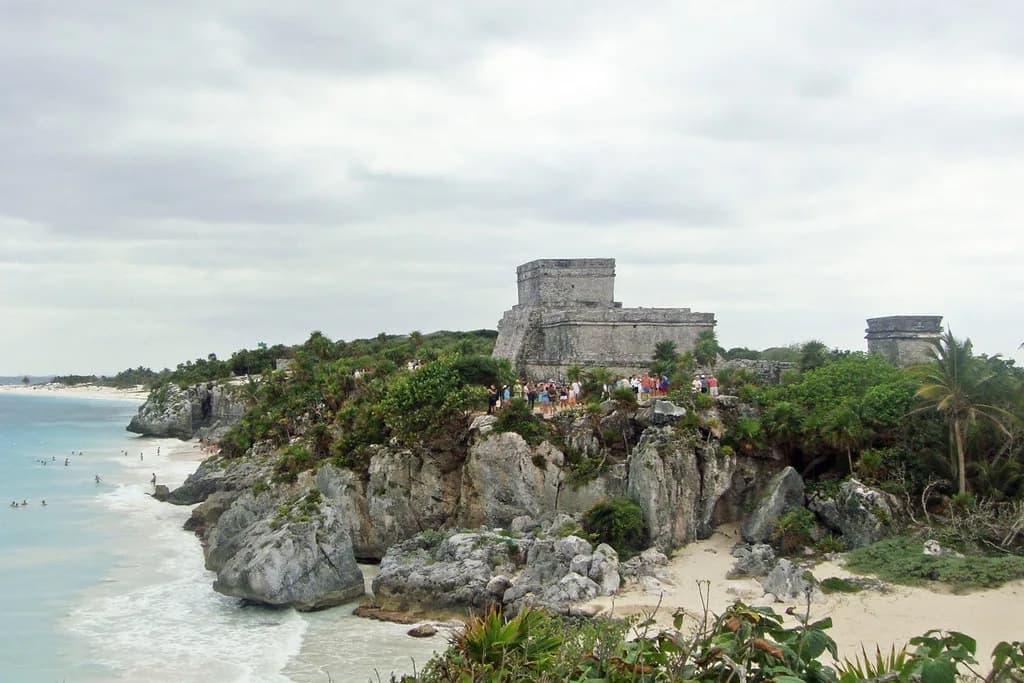
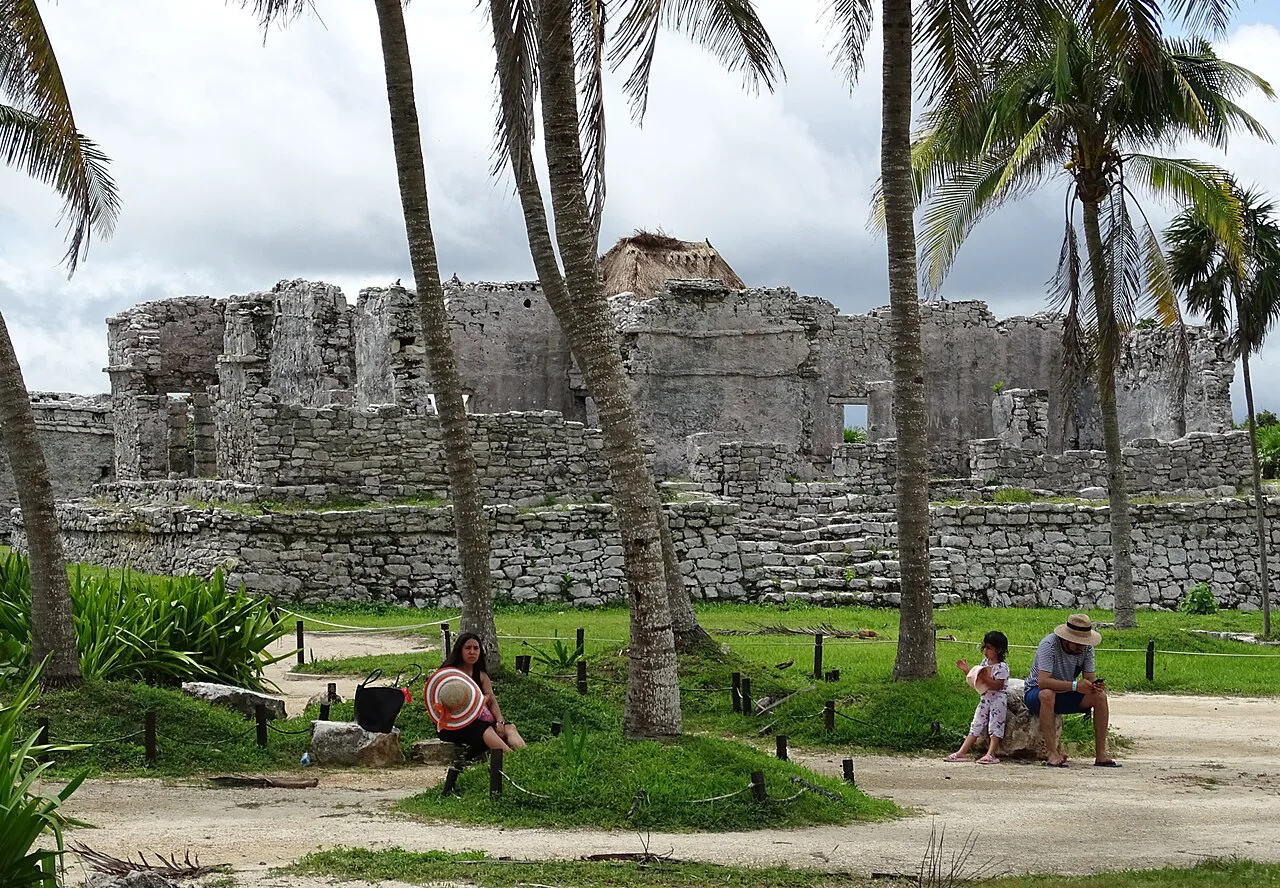
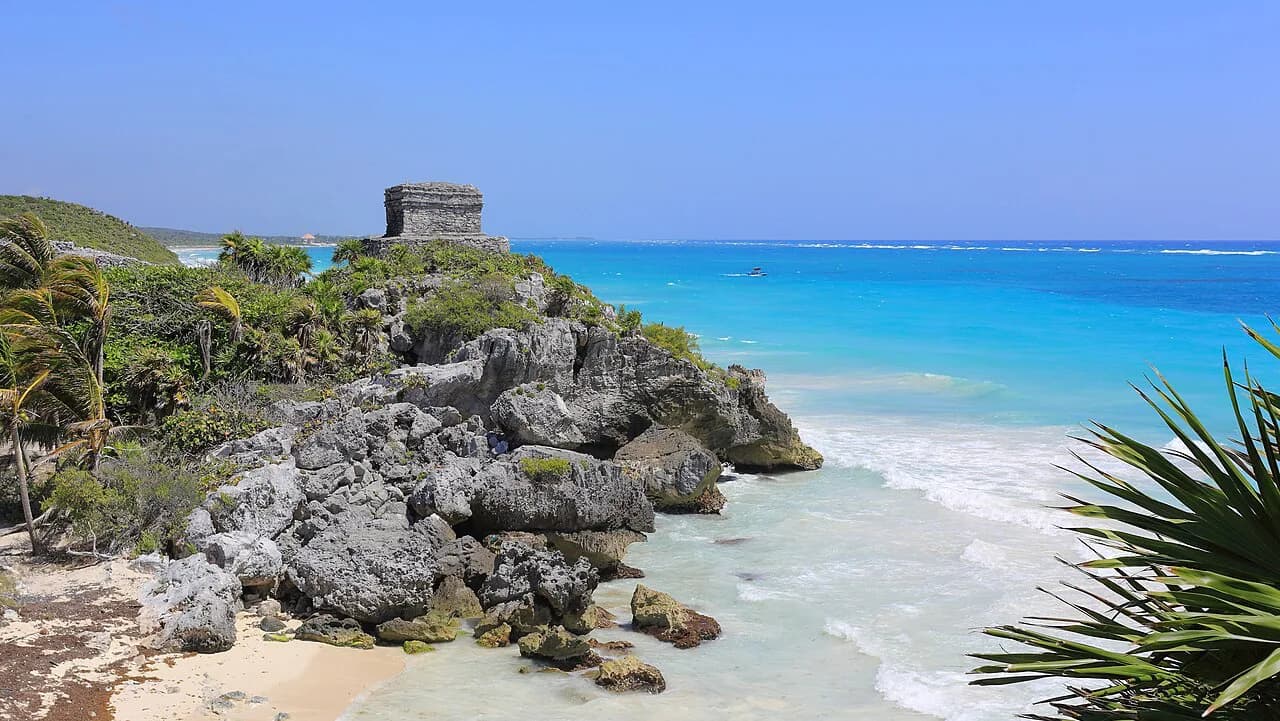
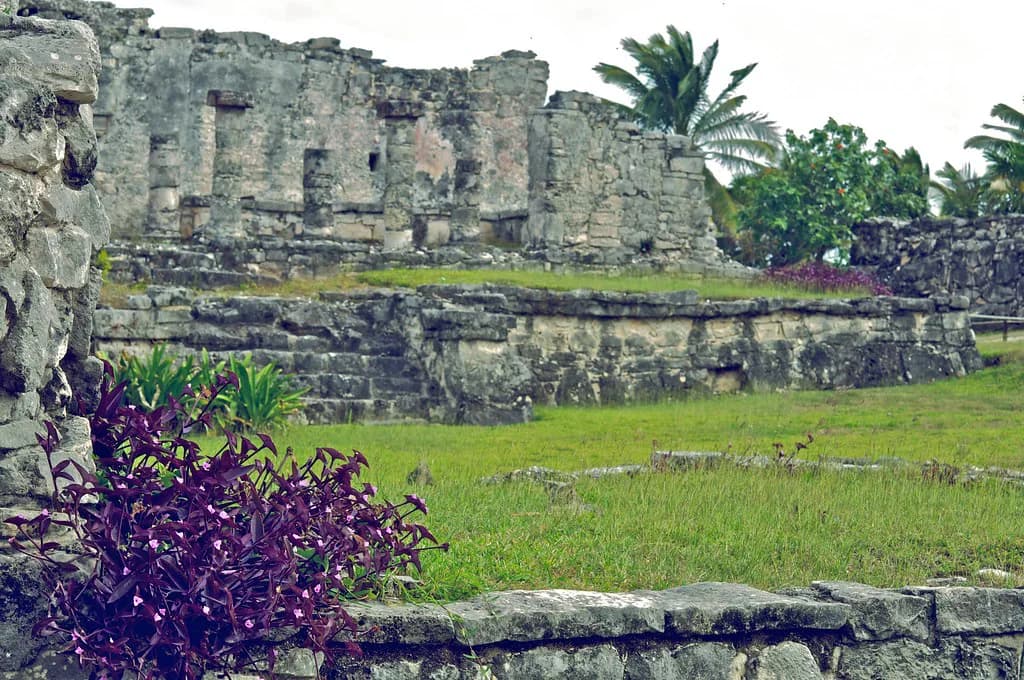
Tulum is the coastal exception among Mexico's major archaeological sites: the stone structures stand along a grassy ridge on a cliff facing east over the Caribbean, rather than deep in the jungle. A twenty-foot wall rings the settlement for defense against invaders from land and sea. That compressed layout is why the visit runs short compared with inland sites, and why the sea view is as much the draw as the buildings.
Signage at the structures is in both Spanish and English, so you can move at your own pace without a guide book open in one hand. Most of the route is open ground with little shade.
The structures to see: El Castillo, the Temple of the Frescoes and the temples
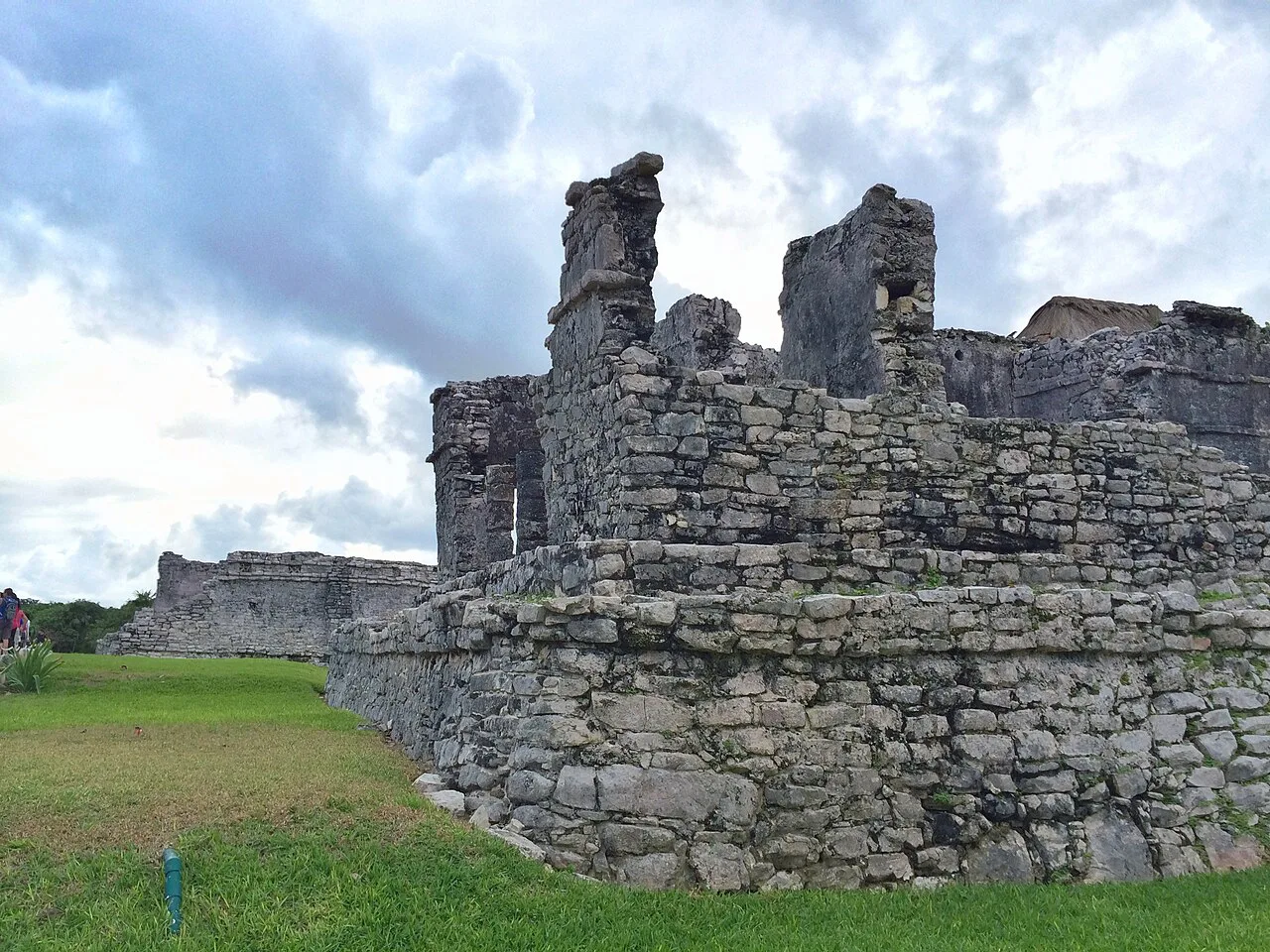
El Castillo is the landmark, a temple whose front carries the standard Maya temple features while its rear reads more like a fortress, with small windows facing the sea that served as a lookout. Photographs of it against the water are the reason many visitors come.
The Temple of the Frescoes holds thirteenth-century murals of ceremonies inside, and its exterior carries corner masks and traces of red paint; the surviving image of Ixchel, the goddess of fertility and medicine, is in this structure. The Temple of the Diving God takes its name from a figure above the doorway that appears to plunge headfirst toward the earth, a motif that also appears elsewhere at Tulum. The Temple of the Wind, the Palacio and the House of the Halach Uinic round out the named groups.
Getting there from Tulum town, Playa del Carmen and Cancún
From Tulum town the site is a short hop: bike, taxi or colectivo all work, and there is parking at the archaeological zone for a fee if you drive. From Playa del Carmen the drive runs about 45 minutes, which makes the ruins a realistic morning excursion rather than a full day out. Tour packages from Cancún and Playa del Carmen typically include transport, which removes the logistics at the cost of a fixed schedule.
Cancún airport is the second-closest airport, about 1.5 hours or 73 miles away by road, and Tulum's own airport handles flights from several US and Canadian cities. A rental car pays off if you want to pair the ruins with cenotes or with the Cobá Ruins in one day, since you set your own pace. For where the site sits relative to the hotel zone and center, see Tulum Neighborhoods: 4 Area Guides.
Arriving early to beat the buses and the heat
The site opens early in the morning, and arriving at opening is the single most useful decision you can make. Tour groups from Cancún and Playa del Carmen typically pull in mid-morning, so the first hour brings open walkways, softer light for photographs of El Castillo and far less heat on ground that offers almost no shade. Early arrival also shortens the wait at the single main entrance and the one public restroom.
Admission is free for Mexican citizens on Sundays, which makes Sunday the busiest day for domestic visitors; Monday through Saturday is the quieter choice. Confirm the day's opening time before you set out, since schedules can change.
Entry tickets, camera fees and cash
The ticket booth has charged around 95 pesos or 5 US dollars for entry, with a small added fee if you bring a camera or video equipment, so carry pesos or dollars in cash rather than relying on a card. Treat those figures as a guide rather than a locked-in rate, and check the posted fee at the window.
Outside the entrance you will find vendors and shops selling snacks, water and souvenirs, which is the practical place to pick up anything you forgot. Buy souvenirs on the way out instead of carrying them around the site. The water and lunch options at the entrance mean you do not need to haul a full picnic.
Pack for sun and for walking: comfortable shoes, a hat, sunglasses, sunscreen, a water bottle and a towel if you plan to swim. A lightweight rain poncho earns its space because tropical showers can arrive in any month. Wear your swimsuit under your clothes, since there are no changing rooms on site.
How long a visit takes: the fast loop versus the half day
A brisk walk past the main structures takes well under two hours, and that is the right call in high heat or on a tight schedule. Add the beach and the day stretches: most visitors who descend to Playa Ruinas and swim spend a half day on the site. Size the visit to your tolerance for sun, since the ridge has little cover.
The beach below the ruins is public, so there is no separate ticket for the sand, but the only way in is through the ticketed site. That is the trade-off: you pay the entry fee whether you want the ruins, the beach or both.
The staircase down to Playa Ruinas and who it suits
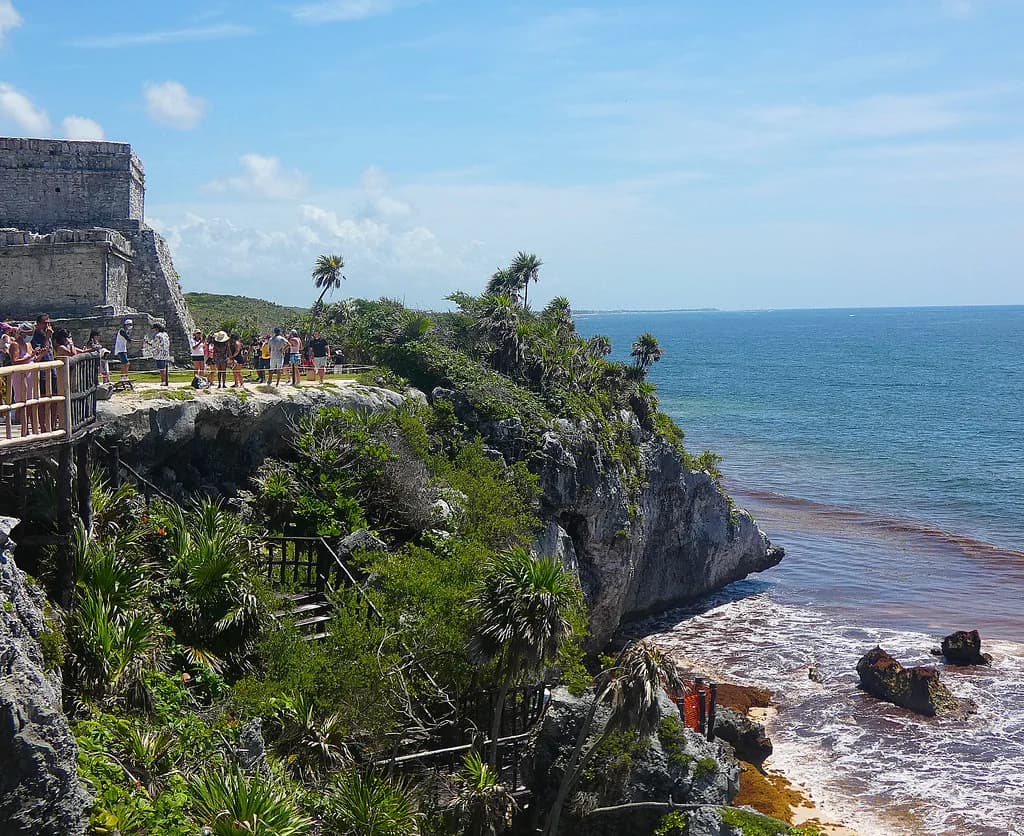
To reach the beach, follow the path far to the left until you reach the lookout where people stop for photos, then take the steep staircase down the weathered coral cliff. The descent is a real trek in the heat and not directly accessible for visitors with mobility issues, so treat it as a decision rather than a footnote. Water shoes help because the sand is soft but the water hides rocks.
The swim itself is the reward: the beach sits inside the protected Tulum National Park, below the cliffs. Bring a hands-free bag for the climb back up and leave the heavy camera gear behind if you are going in the water.
Site rules, restrooms and facilities
Facilities are minimal: the only restroom sits just before the entry point, so use it before you go in, and there is a single main entrance that can back up as tours arrive. The main paths of the site are comparatively easy to navigate for families, but the steep cliff staircase down to Playa Ruinas is not accessible for wheels, so plan the beach part of the day around who can make the climb.
Photographers should note the camera fee at the ticket window and budget for it in cash. Otherwise the rules are the usual ones for Mexican archaeological zones: stay on the paths and off the structures.
Guided tours versus going on your own
Self-guided works well here because the site is compact and the signage is bilingual; you can read each structure and move on in your own time. Tours sold from Cancún and Playa del Carmen take care of transport and interpretation, and the trade-off is a fixed departure time, which can land you in the mid-morning crush rather than ahead of it.
If you book a tour, confirm whether entry, a guide and the beach stop are included, since operators package these differently. A combined ruins-and-cenote day is the common format.
What to pair with the ruins: cenotes, Cobá and Ek Balam
Cenotes are the natural pairing: a swim in cool fresh water after the hot ridge is the standard half-day extension. The Gran Cenote, with its Sac-Aktun cave system, is the best-known option near town. Sites such as Cobá, with the tall Nohoch Mul pyramid, and Ek Balam sit farther inland and reward an early start of their own rather than a rushed double-header.
For ruins of a different scale, the Palenque ruins in Chiapas, with the Temple of the Inscriptions, are a separate trip rather than a day out from Tulum. Keep the Tulum day focused: the ruins, the beach, then one cenote.
Visiting with kids or with limited mobility
The flat main loop and the stroller-friendly paths make the site manageable for families, but the cliff staircase to Playa Ruinas is not, so plan the beach part around whoever can handle the climb. Bathroom timing matters with children because there is just the one restroom at the entrance.
The early arrival strategy reduces both heat exposure and waiting. Bring water for everyone; the shade is scarce on the ridge.
Should you build your Tulum day around the ruins?
Yes, if you arrive at opening and either skip the beach or budget a half day for it. Pairing the ruins with the staircase down to Playa Ruinas or with a cenote afterward gives the day its shape without rushing either.
Bring pesos for entry and any camera fee, wear shoes that handle steep coral steps, and get there before the tour buses from Cancún and Playa del Carmen. Everything else, from the walk-through to the swim, follows from those three choices.
Explore more Tulum guides
- Akumal: A Quiet Riviera Maya Beach Town for Turtles, Lagoons and Ruins
- Cenote Calavera
- Cenote Cristalino
- Cenote Zacil-Ha
- Cobá Ruins
- Gran Cenote
- Punta Allen
Frequently Asked Questions
Do I need a tour to visit the Tulum ruins?
No. The site is compact, signage is in both Spanish and English, and you can bike, take a taxi or colectivo, or drive yourself. A tour is worth considering if you want interpretation of the temples and transport from Cancún or Playa del Carmen handled for you.
Can you swim at the Tulum ruins?
Yes, at Playa Ruinas below the cliff, which is a public beach reached through the ticketed site. Take the path to the left, find the lookout, then descend the steep staircase; it is not suitable for visitors with mobility issues.
Sources
Notes for your next Mexico trip
Optional updates when we add or correct a town guide.
You might also like
Continue reading
More guides you'll find useful