Whale Watching in Mexico: Baja Lagoons, Loreto and Sea of Cortez
Whale watching in Mexico centers on Baja's gray whale lagoons from December through April. Compare the three lagoons and see what a panga trip includes.
On this page
Whale watching in Mexico means gray whales in Baja's desert lagoons, and the season runs from December through April, when Pacific gray whales leave Arctic waters for the warm, protected lagoons of the peninsula. In those lagoons the whales often bring calves alongside small open boats, a behavior local fishermen named ballenas amistosas, the friendly whales. This guide compares the three main gray whale lagoons, explains how a panga trip works, and separates those sheltered lagoon days from the open-water whale trips run out of Loreto.
Almost everything here happens on the Baja California peninsula, and the logistics differ sharply between the lagoons, so where you base yourself shapes the trip. Laguna Ojo de Liebre and San Ignacio Lagoon both sit in Baja California Sur, in and around the El Vizcaíno Biosphere Reserve, with Ojo de Liebre near Guerrero Negro and San Ignacio at the end of a long dirt road, while Magdalena Bay is the closest of the three to a paved approach.
The three gray whale lagoons compared
Laguna Ojo de Liebre, formerly called Scammon's Lagoon, holds one of the largest gray whale aggregations on the planet, with operators reporting days of more than 100 whale sightings. It also sits at the end of the longest road transfer of the three, which is the price of its whale numbers. San Ignacio Lagoon is much smaller, so more boats work the same water and pressure on the whales is higher.
Magdalena Bay has the shortest drives and the most comfortable base of the three, but fewer whales, though the same close encounters are possible. Plan on choosing between road time, boat pressure and whale volume rather than hunting for a single best lagoon. All three lie within reach of the peninsula's southern towns, so a trip can combine a lagoon with time in Baja California Sur.
Laguna Ojo de Liebre and Guerrero Negro
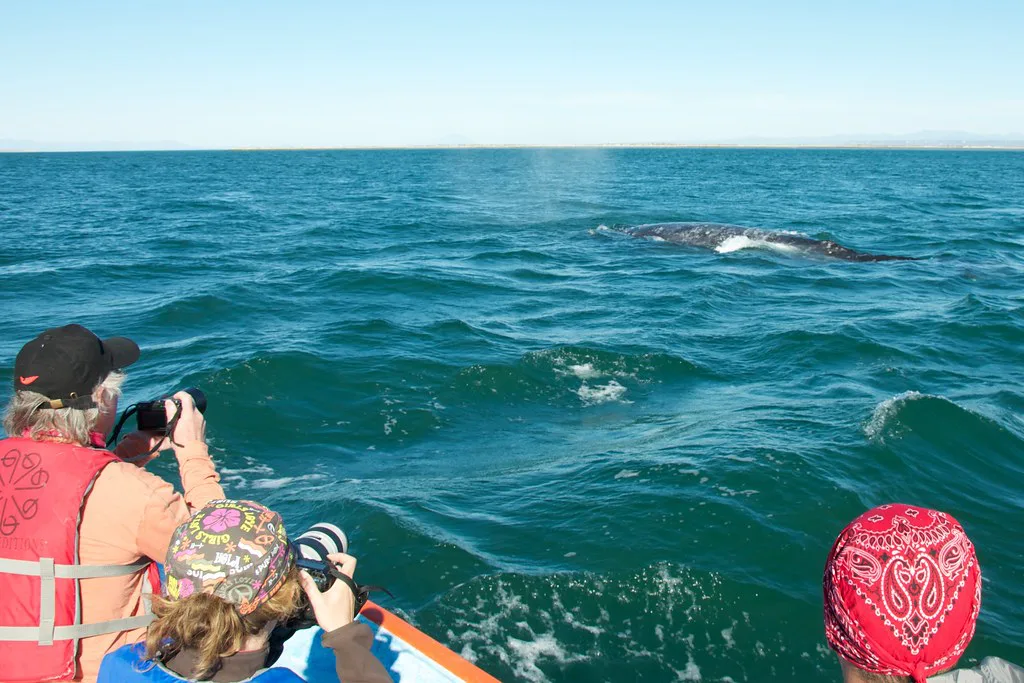
Guerrero Negro is the gateway town for Laguna Ojo de Liebre, and multi-day operators run their lagoon days from there inside the biosphere reserve. On a five-day Baja Wild Encounters expedition, the first day is a meet-and-greet in Loreto followed by a scenic transfer and lunch on the way to Guerrero Negro, with dinner and an expedition briefing that evening. Weather, marine-life reports and other factors can shift the itinerary, so treat any published day-by-day plan as a shape rather than a schedule.
Can I see whales from shore in Baja? The gray whale lagoons are worked by boat, and the sources describe outings in pangas from ecolodges and camps on the shore rather than whale watching from land. Ask your operator whether a shore day is part of the itinerary, since boat time is what the trip delivers.
Do I need to speak Spanish on a whale watching trip? Expedition operators run trips with guides for international travelers, and the captains at San Ignacio Lagoon are local residents who work with those guides. Let the operator know any language needs when you book, because guide assignments vary by departure.
Are gray whales in Mexico in summer? No. The gray whale season in Baja's lagoons runs December through April, and the winter months are when the whales are in the breeding lagoons.
The lagoon delivers volume: the operator describes some outings with mothers presenting calves, others full of spy-hopping, and occasional breaching. Build in a buffer day if you can, because a single boat outing is wildlife and nothing about the sightings is guaranteed.
San Ignacio Lagoon and the friendly whale encounter
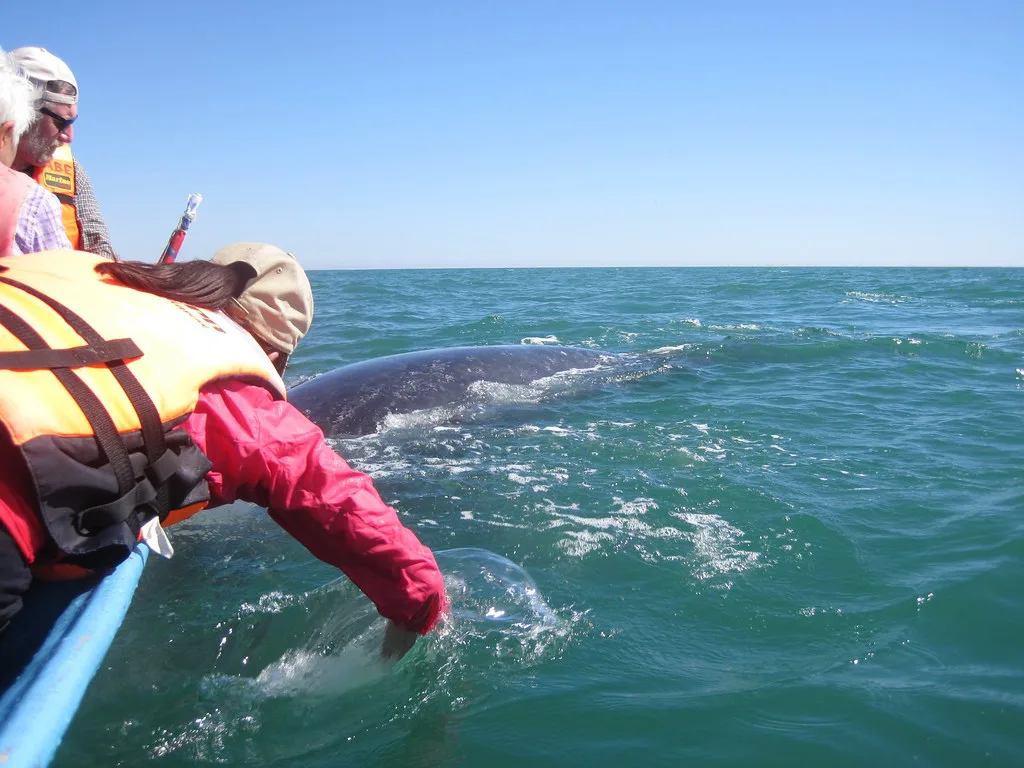
San Ignacio Lagoon is where the close approach happens most reliably, with mothers and newborn calves coming to the skiffs and lounging alongside while passengers scratch their backs. Baja Ecotours runs its whale watching from Campo Cortez Ecolodge, a solar-powered camp on the lagoon shore at the mouth of a bird estuary, reached by a long dirt road over dunes and low water crossings. The shoreline there carries ancient whale fossils, bones and shells, and mangroves along the water draw migrating birds, so non-boat hours have something to fill them.
The lagoon's size cuts both ways: it concentrates whales in a small area, which makes for quick, close encounters, and it concentrates boats on the same water. Travelers who want a quieter experience should weigh that against the shorter run to the whales.
Magdalena Bay: shorter drives, fewer whales
Magdalena Bay is the practical choice when you have limited days, because the drives are short and the accommodations are the nicest of the three lagoon bases. The catch is whale numbers: fewer animals mean a slower, less certain search, even though the friendly encounters still happen here. As one operator puts it, you cannot say hello to a thousand whales on a two-hour boat ride.
How a panga trip works
Lagoon whale watching happens in pangas, small open boats with low sides designed so passengers can lean over and reach the water. Baja Ecotours keeps group sizes small partly by owning its own boats, and its captains are residents of San Ignacio Lagoon with decades on that water, steadying the panga in position while whales circle. Captains also follow lagoon rules on not crowding the whales and on courtesy toward other boats, which is worth asking about when you compare operators.
Operators run small groups in the vans and boats, and multi-day trips build in several outings so one slow morning does not define the trip. Ask how many passengers share a boat and how many outings are included before you compare prices.
Loreto and the Sea of Cortez: blue whales and dolphins
Loreto is the base for open-water trips on the Sea of Cortez, where the targets are blue whales and fin whales, the two largest species, along with dolphins that sometimes travel in pods of hundreds. Boats typically leave the Loreto dock around 8 a.m. and return between 1 and 4 p.m. depending on conditions, and weather is a major factor in whether a day goes out. Humpbacks, Bryde's whales and orcas turn up on occasion too.
These are open-sea days, not sheltered lagoon afternoons, so they suit travelers who want big-cetacean variety rather than guaranteed close approaches. Sea-sickness pills belong on the packing list if you are prone to nausea, since the boat can get wavy.
What a multi-day Baja whale expedition includes
A Baja Wild Encounters gray whale expedition bundles the transfer from Tijuana to the whale locations and back, all nights of double-occupancy accommodation, breakfast, lunch and dinner, the boat tours and activities named in the itinerary, marine park entrance fees, and guide and captain services. Photographs and videos are part of the package, and single-occupancy upgrades are sometimes available. Flights or transfers to the Tijuana meeting point, extra food and drinks, and gratuities sit outside the price.
Group size runs from four to seven people, and a smaller group can cover the cost of the minimum. Multi-day operators in the lagoons generally use simple, clean motel-style rooms with private hot-water bathrooms, with upgrades possible at some locations, so read the room description before you assume a lodge.
Costs to plan around
Baja Wild Encounters lists 2027 expedition rates of 50,000 MXN per person for the five-day trip and 70,000 MXN per person for the seven-day trip. Treat those figures as the operator's published 2027 prices and confirm what your booking includes before you pay, since inclusions vary by operator. Ask whether park fees, transfers and meals are inside the quote; on this listing they are, which is not universal.
Getting there and picking a base
Tijuana is the meeting point for the longer expedition format, with the operator driving south to the lagoons and back over several days. Loreto serves as the base for Sea of Cortez open-water trips and as the meeting point for some gray whale departures, with the first day given over to the transfer south to Guerrero Negro. Guerrero Negro itself is the closest town to Laguna Ojo de Liebre. How you reach any of these depends on flights and road transfers, so plan the connection with the operator rather than assuming a schedule.
If you are building a longer Baja itinerary around a whale trip, the peninsula's towns and the mainland's transport network take some planning. For the wider picture on buses, flights and transfers, see the guide to getting around Mexico.
When to go: the season window
The gray whale season runs from December through April, and February with early March is the peak window operators point to. Baja Wild Encounters dates its departures from mid-January to the end of March, with February and early March described as the best months. Book early for those weeks, since some 2027 departures are already sold out.
What to bring and how the day feels
Mornings and windy stretches on the water run cold, so pack warm layers and waterproof clothing that can take spray. Biodegradable sun protection matters on the water, and seasickness pills help if you are prone to nausea. For the seven-day trips that add snorkeling, bring your own mask, fins and a 5mm to 7mm wetsuit, since the village visited has no rentals and water temperatures average roughly 57°F to 66°F.
Expect long stretches of waiting between sightings, and expect the payoff to be a whale alongside the boat rather than a staged show. Trips run regardless of a guarantee, so set expectations around what you might see, not what you will see.
How to read a tour listing before you book
Check four things on any whale watching listing: the number of boat outings included, the maximum group size per boat, whether marine park fees and transfers are inside the price, and what happens if weather cancels a day. The lagoon operators with resident captains and their own pangas tend to control group size directly, which is harder when boats are subcontracted. Confirm the meeting point and the transfer format in writing, since a Tijuana pickup and a Loreto pickup mean very different flight plans.
Whale watching beyond Baja
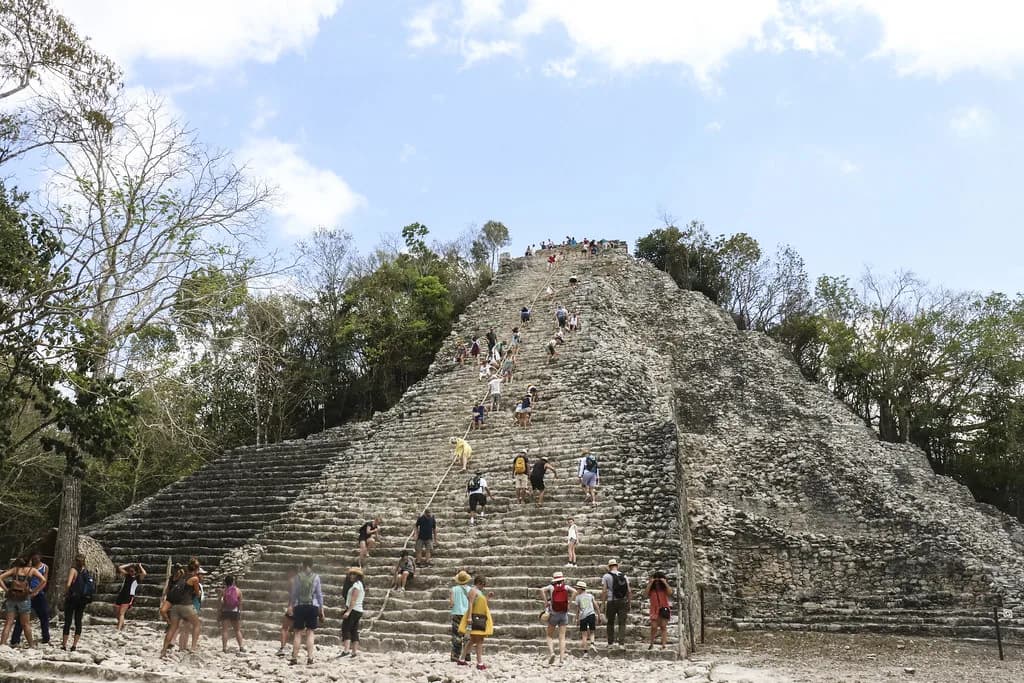
Mexico's other coasts are not gray whale country, but they are worth folding into a longer trip if you are already flying in. Isla Contoy off the Yucatán gives you a different water day, and the Mayan ruins in Mexico reward a stop inland.
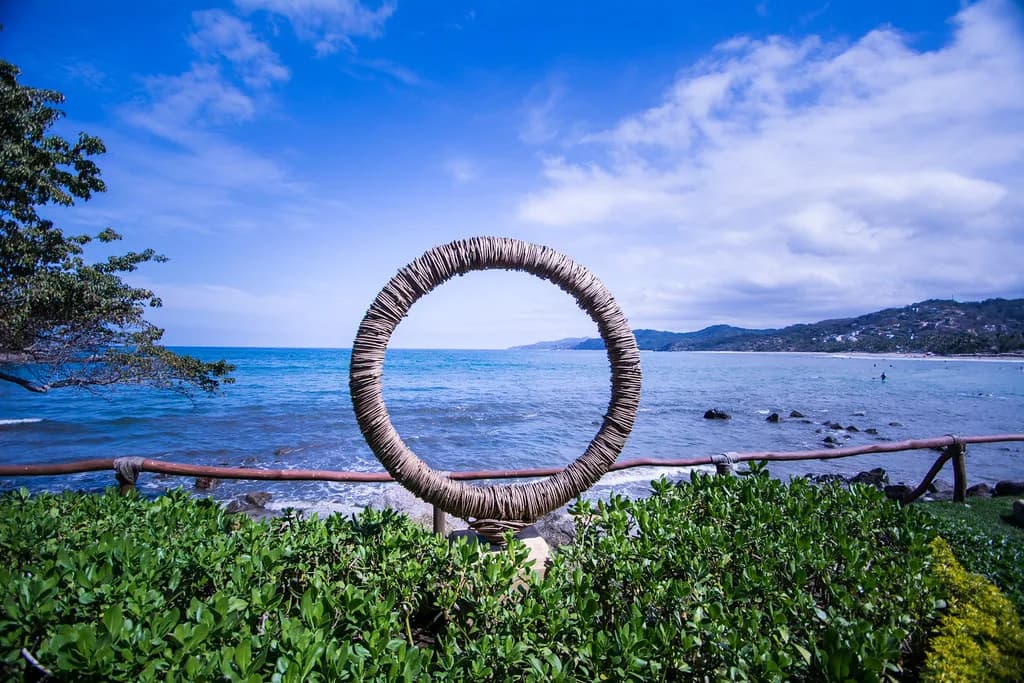
If you head south toward Puerto Vallarta, the Riviera Nayarit stretches along Banderas Bay and gives you another base for coastal time outside whale season. The Oaxaca coast, including Puerto Escondido and Bahías de Huatulco, rounds out the mainland options.
Which lagoon fits your trip
Pick San Ignacio Lagoon if the close encounter is the reason you are going and you can handle the rough final road. Choose Laguna Ojo de Liebre for whale volume if you accept the longer transfer, and Magdalena Bay if short drives and easier nights matter more than counts. Whatever you choose, the whale watching itself happens in the water, so reserve early for February and early March.
Explore more Mexico guides
- Baja California Sur
- Isla Contoy
- Oaxaca Coast
- Riviera Nayarit
Frequently Asked Questions
Can I see whales from shore in Baja?
The gray whale lagoons are worked by boat, and the sources describe outings in pangas from ecolodges and camps on the shore rather than whale watching from land. Ask your operator whether a shore day is part of the itinerary, since boat time is what the trip delivers.
Do I need to speak Spanish on a whale watching trip?
Expedition operators run trips with guides for international travelers, and the captains at San Ignacio Lagoon are local residents who work with those guides. Let the operator know any language needs when you book, because guide assignments vary by departure.
Are gray whales in Mexico in summer?
No. The gray whale season in Baja's lagoons runs December through April, and the winter months are when the whales are in the breeding lagoons. Summer trips in Mexico would be a different kind of wildlife outing altogether.
Sources
Notes for your next Mexico trip
Optional updates when we add or correct a town guide.
You might also like
Continue reading
More guides you'll find useful